
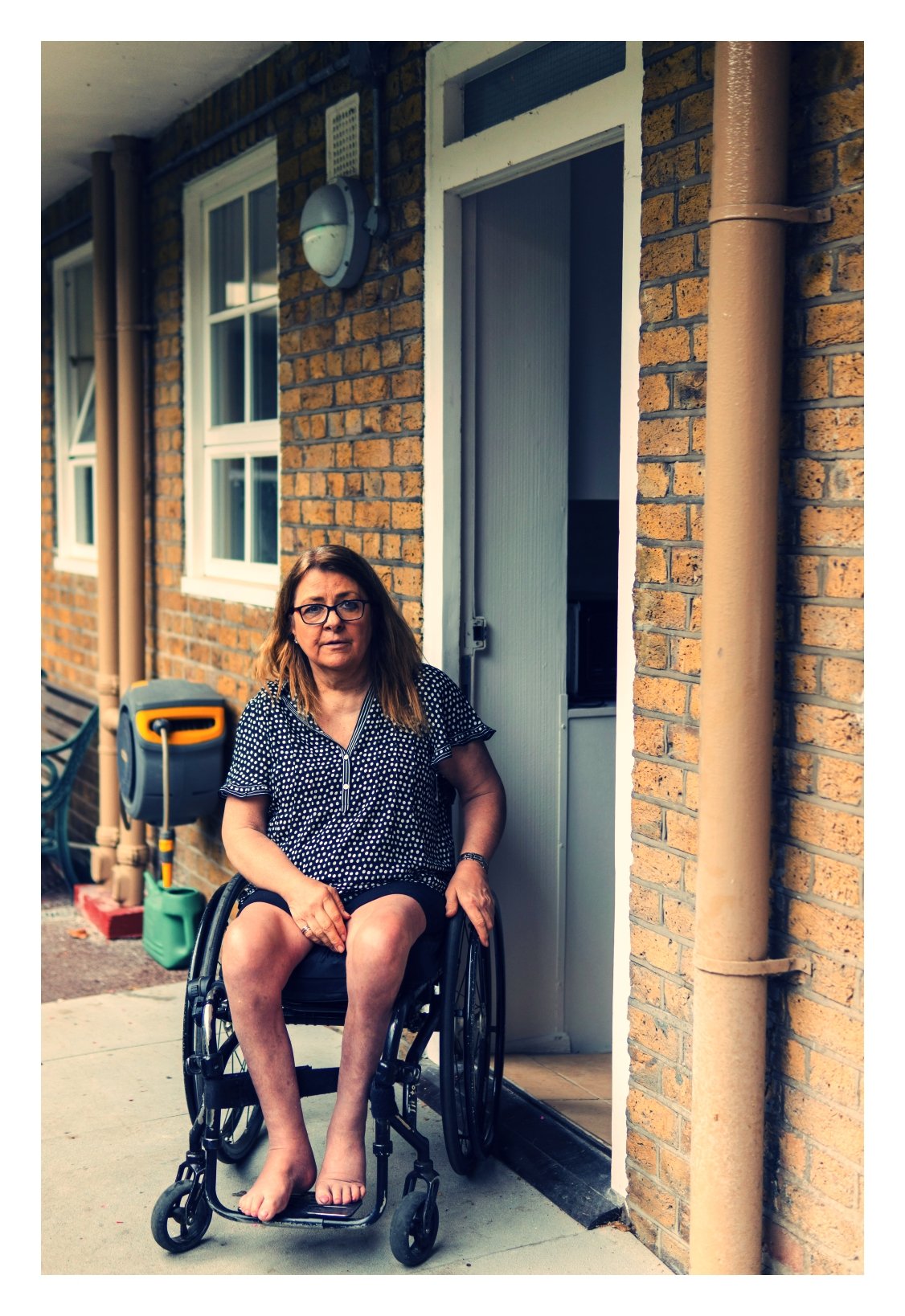

My aunt Marie is my mom’s older sister. She is 58 and has been on Social Security Disability Insurance since 2018, after a series of strokes left her unable to keep working as a hospital records clerk in Buffalo, New York. Her monthly SSDI payment in 2025 is $1,514. She rents a one-bedroom apartment in a HUD-subsidized building for low-income seniors and adults with disabilities. Her budget works. Most months she has $40 or $50 left over. I helped her build it three years ago over a long weekend visit, and she has refined it since. I want to share the actual numbers in this article, because most personal finance writing about disability income is either too vague to be useful or assumes a household structure that does not match how most disabled adults actually live.
According to the Social Security Administration’s 2024 Annual Statistical Report, 7.4 million Americans received SSDI in December 2024, and another 7.7 million received Supplemental Security Income (SSI). The average monthly SSDI benefit in 2025 was $1,584. The maximum SSI benefit for an individual was $967. Those are tight numbers, but they are not unworkable numbers. This article walks through Marie’s actual monthly budget and what it took to make it sustainable. She gave me explicit permission to share these numbers.
Marie’s Real Monthly Budget

Here is what Marie’s spending looks like in a typical month. These are her real numbers from August 2025.
Income: SSDI $1,514, SNAP $187. Total: $1,701.
Rent: $565. Her apartment is in a HUD Section 202 building for low-income seniors and disabled adults. Without the subsidy, the same unit would rent for about $950 in her area of Buffalo.
Electric and heating: $98 average. She uses LIHEAP every winter for additional heating support, which kicks in $400-$600 once a year and brings her effective winter cost down further.
Phone and internet: $58. She has Lifeline phone service ($9.25 off her phone bill) and a low-income internet plan from Spectrum at $30 a month plus tax.
Groceries: $310. SNAP covers $187 of this, so her out-of-pocket grocery cost is $123.
Health expenses out-of-pocket: $65. Medicare Parts A and B cover most of her care, supplemented by a Medigap plan that costs her $187 a month and is paid by New York’s Medicare Savings Program. She has occasional copays and OTC medications.
Transportation: $85. She does not drive. The county para-transit service is $4 per round trip and Medicaid covers her medical-related rides.
Personal care, household, clothing: $45.
ABLE account deposit: $25.
Spending money for the small joys (occasional movie rental, coffee at the diner once a week, a magazine): $40.
Total monthly spending: $1,291. Cushion: $410, but most of that gets eaten by annual costs (renter’s insurance, prescription out-of-pocket maximums, occasional clothing replacement) so her real average leftover is closer to $40-$50 a month going into savings.
The Programs That Make This Math Work
Marie’s $1,514 SSDI check would not stretch this far without program stacking. The total support package she receives, counting subsidies, is closer to $2,200 a month in equivalent value.
HUD Section 202 housing: Section 202 specifically serves low-income seniors and disabled adults. Marie’s rent is capped at 30 percent of her income. The same apartment at market rate would cost $950, so the subsidy is worth roughly $385 a month. The waitlist when she applied was 26 months. The HUD Resource Locator (hud.gov/findshelter) is the starting point.
SNAP: $187 a month for a single adult. Eligibility for SSDI recipients in most states is automatic based on income. Marie applied through New York’s SNAP portal and was approved in 19 days.
Medicare Savings Program: Marie qualifies for the Specified Low-Income Medicare Beneficiary (SLMB) program, which pays her Medicare Part B premium of $185 a month and her Medigap plan. This is one of the most underused benefits in U.S. social welfare. The Medicare Rights Center estimates that 3 million eligible Americans do not enroll, leaving billions in unclaimed benefits each year.
LIHEAP: $400-$600 once a year toward winter heating. Application is through her county social services office in October each year.
Lifeline phone discount: $9.25 a month off her phone bill. Available to anyone on SNAP, Medicaid, SSI, or Federal Public Housing Assistance.
Combined, these programs add the equivalent of $580-$700 a month to Marie’s spending power. She did not get them by accident. She applied for each one separately, and a benefits counselor at her local Aging and Disability Resource Center (ADRC) walked her through the list. I did the driving when she had her in-person appointments.
SSDI vs. SSI: Why the Distinction Matters
Marie is on SSDI because she had enough work history (28 years as a hospital records clerk) to qualify for it. SSDI is not means-tested. There is no asset limit. Marie can have $50,000 in the bank if she somehow saved it, and her SSDI check would still come every month.
SSI (Supplemental Security Income) is means-tested. The asset limit is $2,000 for an individual and $3,000 for a couple as of 2025. These limits have not been raised since 1989. Yes, you read that right. The SSA’s own 2023 inflation analysis found that if the limits had been indexed to inflation, they would be roughly $5,400 (individual) and $8,100 (couple) today. The unindexed limits are one of the cruelest design failures in U.S. social policy, but they are the law until Congress changes them.
If you are on SSI, the budget framework is similar to Marie’s but you have stricter rules on savings. The ABLE account (more on this below) is essential. Without it, you genuinely cannot build a meaningful emergency fund without losing your SSI eligibility. I have helped two workshop attendees with SSI navigate this in the last year. The asset limit traps people in a way that is hard to explain until you live with it.
ABLE Accounts: The Savings Workaround

ABLE (Achieving a Better Life Experience) accounts were created by federal law in 2014 and allow people with disabilities to save without losing means-tested benefits. The mechanics:
Anyone whose disability began before age 26 can open an ABLE account (this rises to age 46 in 2026 under SECURE 2.0). Contribution limits are $19,000 per year from any source, with an additional $14,580 if the beneficiary is employed.
Balances up to $100,000 are excluded from the SSI asset limit. Growth inside the account is tax-free, and withdrawals for qualified disability expenses (housing, transportation, education, employment training, assistive technology, healthcare, basic living expenses) are also tax-free.
Marie opened a New York State ABLE account in 2023 and contributes $25 a month. Her balance is now around $670. The account is in low-cost target-date investment funds via Vanguard, the same provider New York uses for its 529 plans.
If she didn’t have the ABLE account, she would not be able to save anything above the SSI asset limit (if she were on SSI). She would also lose Medicaid eligibility if her checking balance crossed $2,000. The ABLE account is the bridge that lets disabled adults build any kind of financial cushion without losing the programs they depend on. If a traditional bank account isn’t part of your setup, here’s how to save money without a bank account using tools that won’t disrupt your benefits.
Where the Budget Breaks Down (Honestly)
I want to be honest about what does not work in Marie’s budget, because most personal finance articles on disability income skip this part.
She cannot afford to replace her refrigerator if it breaks. She cannot afford a $400 dental visit. She cannot afford to visit my family in Cleveland without a benefits-protected travel fund (she uses her ABLE account for this and has about three years to save up enough for a flight and a few nights’ stay). She cannot afford to absorb a 10 percent inflation year in groceries without help. She has had two years where she ate less because grocery prices rose faster than SNAP adjustments.
The structural reality of living on disability income in the United States is that one unexpected $500 expense can break the system. The system depends on subsidies that take months to apply for, programs with long waitlists, and a federal asset limit that was last updated in 1989. Marie’s budget works because she has been at it for seven years and has every program perfectly stacked. New SSDI and SSI recipients often spend the first two years in genuine crisis while they figure out what to apply for and wait for approvals.
If You Are New to Disability Income, Here Is the Order I Suggest
Based on watching Marie’s journey, helping the workshop attendees in similar situations, and walking my brother Rick’s coworker (a truck driver who had a back injury in 2022) through the early SSDI application, here is the order of operations that gets you to a stable budget fastest.
First week after approval: file your benefits start paperwork, check that Medicare or Medicaid enrollment is in process, and contact your local Aging and Disability Resource Center (ADRC). ADRC.gov has a locator. Their benefits counselors are free and they know what programs exist in your state.
First month: apply for SNAP, LIHEAP, Lifeline phone discount, and any state-specific disability programs. Submit all applications even if you are not sure you qualify. Bureaucracies sort eligibility on their end; you just need to apply.
First three months: apply for housing assistance. HUD Section 8 vouchers, Section 202 housing for seniors/disabled, and state-specific housing programs all have waitlists. Get on every list that fits your situation. You can decline an offer later. You cannot accelerate a waitlist you never joined.
First six months: if eligible, open an ABLE account. Set up a small auto-deposit (even $10-$25 a month) to start building the habit and balance. Look into the Medicare Savings Program if you have Medicare.
First year: build out the monthly budget. Track your actual spending for 90 days using the simplest tool you can stand. A notebook works. The Mint app works. Whatever you will actually use is the right tool. If focus or follow-through is a challenge, our guide on how to budget for ADHD adults covers automation tricks that reduce the mental load of tracking.
Common Misconceptions I Hear All the Time
Disability income recipients hear a lot of well-meaning but wrong advice from people who do not live with these constraints. A few examples I have heard repeated this year, both at workshops and in conversations with Marie’s neighbors.
‘You should just work part-time to supplement.’ SSDI allows this within limits (the 2025 Substantial Gainful Activity threshold is $1,620 a month). SSI also allows it but reduces the check $1 for every $2 earned. Both programs have detailed work-incentive rules (Ticket to Work, IRWE, PASS plans) that help people transition back to work. But many people on disability cannot work at all, or cannot work consistently, which is why they are on the program in the first place. The advice to ‘just work more’ often comes from people who don’t understand what disability means in practice.
‘You should move to a cheaper state.’ Some states have meaningfully lower costs of living, but disability programs vary state-to-state, and moving disrupts established medical care, social support networks, and program enrollment. The math sometimes works (Mississippi vs. New York can be a meaningful change). The math often does not work after factoring relocation costs, medical care disruption, and lost social connections. Marie has stayed in Buffalo specifically because her medical team, her sister (my mom), and her established friend network are all there.
‘You should invest your savings to grow them.’ For SSDI recipients with no asset limit, this is fine. For SSI recipients, holding investments above the $2,000 limit ends your benefit. The ABLE account is the only legitimate path. Friends who mean well sometimes recommend a brokerage account, not realizing the rules.
Frequently Asked Questions
Can I save for an emergency fund if I am on SSI?
Yes, but only inside an ABLE account if you qualify. SSI’s $2,000 asset limit applies to checking, savings, and brokerage accounts. Money inside an ABLE account up to $100,000 is excluded. If you are not yet eligible for ABLE (disability onset must be before age 26 currently, rising to 46 in 2026), the only legal SSI-compatible savings strategy is a burial trust (up to $1,500 excluded) and spending down promptly any other income above the limit. The asset limit is a known cruelty in the SSI program and the National Council on Aging has been lobbying for years to raise it.
Will trying to work cause me to lose my disability benefits?
Not immediately, and not without protections. SSDI’s Trial Work Period gives you nine months of work attempts at any earnings level without affecting your benefit. After that, earnings above the Substantial Gainful Activity threshold ($1,620/month in 2025) can end benefits, but there is a five-year Extended Period of Eligibility where benefits can restart if you become unable to work again. SSI uses a different calculation: $1 of benefit lost per $2 earned, after a $65 monthly income exclusion. The Ticket to Work program offers free support for return-to-work attempts with protected benefits. Talk to a benefits planner before changing your work situation.
How does Medicaid work if I am on SSDI?
SSDI is paired with Medicare, not Medicaid, after a 24-month waiting period from your SSDI entitlement date. During that 24-month gap, you may qualify for Medicaid based on your income, which is usually low enough on SSDI alone. After you are on Medicare, you may still qualify for Medicaid as a ‘dual eligible’ if your income is low enough. Dual eligibles get the most comprehensive coverage in the U.S. health system. Apply for Medicaid through your state portal regardless of whether you think you qualify; the rules are detailed and a benefits counselor can usually identify eligibility you missed.
Final Thoughts
My aunt Marie’s budget works because she has been at this for seven years and has every program stacked. The numbers are tight, the system is unforgiving of mistakes, and one broken appliance can throw the whole thing off. But the budget works, month after month. She has built a small ABLE balance, she has stable housing, her healthcare needs are covered, and she has $40-$50 a month going into savings.
If you are new to disability income, give yourself two years to get to where Marie is. The first year is mostly paperwork and waitlists. The second year is when the system starts to feel manageable. The most important phone number you will get in the process is your local Aging and Disability Resource Center, which you can find at ADRC.gov. Their benefits counselors are free, and they know what is available in your state better than any blog ever will.