


Living on $1,500 a month after rent in 2026 is tighter than ever, but it is far from impossible. With grocery prices up 25% over 5 years, gas hovering around $3.50 a gallon, and even a basic phone plan costing $30, every dollar gets a job before it leaves your wallet. The good news is that millions of Americans pull this off every month, and most of them feel less financial stress than people earning twice as much.
This guide walks through a real $1,500-per-month budget after rent, broken down by category, with specific apps, programs, and tactics that make each line item achievable. By the end, you will have a clear plan, a list of free tools to track your spending, and a path that leaves $50 to $200 of savings every month even on this tight budget.
The $1,500 After-Rent Budget Breakdown
Here is what a balanced $1,500-per-month after-rent budget looks like for a single adult or a couple in a low-cost-of-living area in 2026:
- Groceries: $300 to $400 per month
- Utilities (electric, water, gas): $150 to $200
- Internet and phone: $50 to $80
- Transportation (gas, insurance, maintenance): $250 to $350
- Health insurance and out-of-pocket medical: $100 to $250
- Personal care, household, and basic clothing: $50 to $80
- Streaming, fun, and small entertainment: $50
- Emergency savings deposit: $50 to $100
- Wiggle room and unexpected: $50 to $100
Adding those middle estimates lands at roughly $1,400, which leaves about $100 of breathing room. The actual numbers shift depending on whether you have a car payment, kids, or chronic medical needs, but the structure stays the same: groceries and transportation are the two biggest categories, and both have major room for optimization.
Step 1: Cut Your Grocery Bill to $75 a Week

Groceries are the most flexible major expense in any low budget. The U.S. average single-person grocery bill is $315 a month, but disciplined shoppers regularly hit $300 or less without sacrificing nutrition.
- Plan a 7-day rotating menu: 5 dinners + 2 leftover nights covers a week and reduces food waste by 30%.
- Shop the perimeter first (produce, dairy, meat) before going down center aisles where most processed foods live.
- Buy proteins in bulk and freeze in single portions: $4 per pound chicken thighs vs. $10 per pound chicken breast doubles your protein budget.
- Use Aldi, Lidl, or WinCo if available: discount grocery stores cut average grocery bills by 15% to 25% versus traditional chains.
- Cashback apps stack on top of sales: Ibotta, Fetch, and Rakuten can return $20 to $40 a month on groceries you were buying anyway. For a deeper dive on cutting food costs, read our full guide on how to save money on groceries.
If you fall short, programs like SNAP, WIC (for moms with kids under 5), and local food pantries can fill the gap without shame. SNAP eligibility kicks in around $1,580 monthly net income for a single person, so anyone living on $1,500 a month after rent likely qualifies.
Step 2: Drop Utilities by 20% This Month
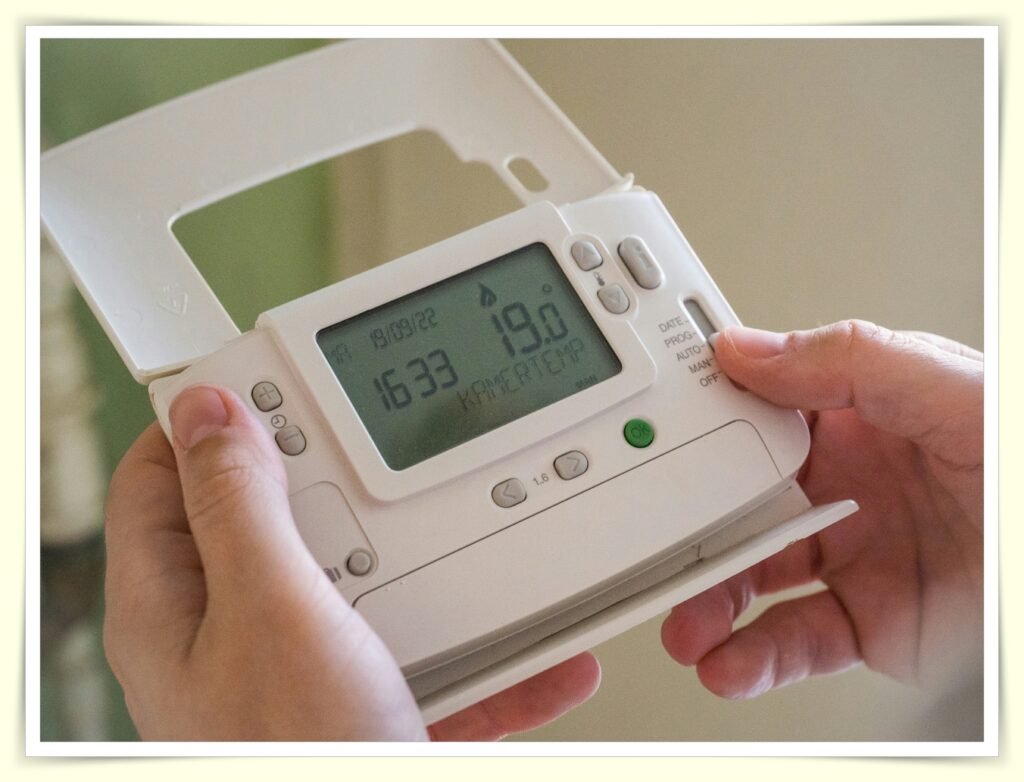
Electric and gas bills are usually the second-biggest “set it and forget it” expense. A few targeted changes can cut combined utility costs by $30 to $60 a month.
- Set the thermostat to 68°F in winter and 78°F in summer. Each 1-degree change saves about 3% on heating or cooling.
- Apply for LIHEAP energy assistance: average annual benefit is $300 to $1,000.
- Use cold water for laundry: cuts washing-machine energy use by 90%.
- Unplug “vampire devices”: gaming consoles, cable boxes, and TVs use $50 to $100 a year sitting idle.
- Switch to LED bulbs (one-time $30 cost saves $200+ over 5 years).
On internet, downgrade to a slower (50 Mbps) plan that still streams Netflix and Zoom but costs $30 to $40 instead of $80. Some carriers offer $30 a month plans for SNAP recipients through state-level low-income programs.
Step 3: Trim Phone and Subscriptions to Under $50
The single fastest budget cut for most people is auditing recurring subscriptions and the phone plan. Apps like Rocket Money find an average of $720 a year in forgotten or doubled-up subscriptions across U.S. users.
Switch to a Low-Cost Phone Carrier
Mint Mobile, Visible, US Mobile, and Cricket all offer plans with 5GB of data for $15 to $25 a month. The major carriers (Verizon, AT&T, T-Mobile) average $80 a month for the same level of service. Switching is free with phone-keep-your-number portability and saves $700 a year.
Audit Streaming Services
Cap streaming at $25 a month total. Pick one or two services and rotate seasonally. Free alternatives include Tubi, Pluto TV, Crackle, your local library’s Hoopla, and Kanopy for movies. Public library cards unlock thousands of free streaming hours.
Step 4: Make Transportation Cheaper
Transportation is roughly 16% of average household expenses. On a $1,500 budget, every dollar saved here makes the rest of life easier.
- Shop car insurance every 12 months. Average annual savings of $400 by switching, according to NerdWallet.
- Use GasBuddy to find the cheapest local gas station daily. Saves about $0.10 to $0.30 per gallon, totaling $10 to $25 a month.
- Combine errands into one weekly trip. Cuts gas usage 15% to 20%.
- Inflate tires to manufacturer spec each month. Properly inflated tires improve fuel economy 3% to 4%.
- If you live in a city, the math may favor selling the car. Owning a used car costs $4,000 to $7,000 a year all-in. Public transit + occasional Uber rides can replace it for $1,500 to $3,000 a year.
Step 5: Lock In Health Coverage Without Breaking the Budget
Skipping health insurance to save $200 a month is the most expensive financial mistake low-income earners make. One emergency room visit averages $1,500 without insurance and can hit $10,000 with even a single overnight stay.
- Healthcare.gov plans for someone earning $18,000 a year usually cost $0 to $30 a month after subsidies in most states.
- Medicaid covers anyone earning under 138% of the federal poverty level in expansion states (about $20,800 a year for a single person).
- Community health centers (FQHCs) charge $0 to $40 per visit on a sliding scale for primary care.
- GoodRx coupons cut prescription costs 40% to 80%. A $30 prescription often becomes $4.
The 30 minutes spent setting up healthcare coverage saves an average of $3,000 to $8,000 in medical surprise costs over the next 5 years. Treat enrollment like a non-negotiable line item in your budget.
Step 6: Save the First $50 Even on This Budget

Saving on $1,500 a month sounds impossible until you make it automatic and small. The trick is to skim the savings off the top before you ever see it. Set up a $25 transfer to a high-yield savings account on each payday.
After 12 months, that $50 a month becomes $600 in the savings account, plus another $20 to $30 in interest at a high-yield rate (currently 4% to 5% APY at banks like Marcus, Ally, and SoFi). It is not life-changing money, but it is a real cushion that prevents the next minor emergency from becoming credit card debt.
Once the first $500 is in place, increase the deposit to $75 a month, and again to $100 once the basics are stable. Building from $0 to $1,000 in savings, even on a $1,500 budget, takes most people 12 to 18 months and shifts how the entire budget feels. Ready to take that further? Here’s exactly how to create an emergency fund from scratch.
Frequently Asked Questions
Is $1,500 a month after rent enough to live on in 2026?
It depends heavily on where you live. In low-cost states like Mississippi, Alabama, Oklahoma, Indiana, and Kansas, $1,500 after rent provides a modest but stable life with $50 to $150 of savings room each month. In high-cost cities like New York, San Francisco, Boston, or Seattle, $1,500 after rent typically requires roommates, public transit only, and aggressive use of food assistance to make the math work. The budget framework in this guide can be adapted to either scenario.
What are the biggest hidden expenses people forget when budgeting on $1,500 a month?
Three categories regularly blow up tight budgets: car repair (average $500 to $800 per incident), medical co-pays (average $40 per primary care visit), and annual subscriptions (Amazon Prime, Costco, AAA). Build a $25-a-month “sinking fund” specifically for these and treat it as untouchable. After 12 months, you will have $300 set aside to cover the inevitable surprise without resorting to a credit card.
How do I avoid debt while living on $1,500 a month?
Avoid two specific traps: paycheck advance apps (Earnin, MoneyLion, Dave) and “Buy Now, Pay Later” services. Even though they often advertise as “free,” they work best for people who can pay back quickly. On a tight monthly budget, late fees and rollover charges add 30% to 80% APR equivalents. If you are short for the month, a community action agency, food pantry, or LIHEAP application is a much cheaper safety net than borrowing $200 to be paid back next payday.
Final Thoughts
Living on $1,500 a month after rent forces a level of financial clarity that higher earners rarely develop. Once you know exactly where every dollar goes, you can spot waste, redirect dollars to savings, and build resilience that compounds over years. The framework above gives you a working budget, the apps and programs that make it possible, and a clear path to your first $500 emergency cushion.
Pull up your last 30 days of bank transactions tonight, sort them into the categories above, and identify the two biggest “leaks.” Fix those this week, automate the $25 savings transfer this weekend, and 90 days from now you will have measurable progress instead of monthly stress. Your budget can be tight without being a trap.