


Working for yourself comes with freedom, flexibility, and one giant retirement headache. There is no HR person handing you a 401(k) enrollment form, no employer match, and no automatic paycheck deduction. If you do not set up your own retirement plan, nothing happens. The Roth IRA is the simplest, most powerful starting point for self-employed Americans, and you can open one this week. Not sure how to manage your freelance income first? Read our guide on how to budget as a freelancer.
This step-by-step guide shows you exactly how to open and fund a Roth IRA when you are self-employed, including 2026 contribution limits, income rules, the best providers, and a workflow for funding your account from irregular freelance income. By the end, you will know whether a Roth IRA is your best move and exactly how to get $7,000 working for your future tax-free.
Why a Roth IRA Is the Self-Employed Power Move
A Roth IRA is a retirement account where you contribute after-tax money, the investments grow tax-free, and qualified withdrawals after age 59 and a half are also completely tax-free. For self-employed workers, this matters more than it does for W-2 employees, and here is why.
Most self-employed people in their 20s and 30s have lower current tax brackets than they will in their 50s. Paying tax now at a 12% or 22% rate on your contributions is a bargain compared to paying tax later at 32% or higher. Roth contributions can also be withdrawn (just the principal, not the earnings) at any time without penalty, which means your Roth doubles as a backup emergency cushion if your freelance income dries up.
Add in the fact that Roth IRAs have no required minimum distributions during your lifetime, and they become one of the best estate-planning tools available. Money in a Roth can compound for 50+ years and pass tax-free to your heirs.
Step 1: Confirm You Qualify Under the 2026 Income Rules
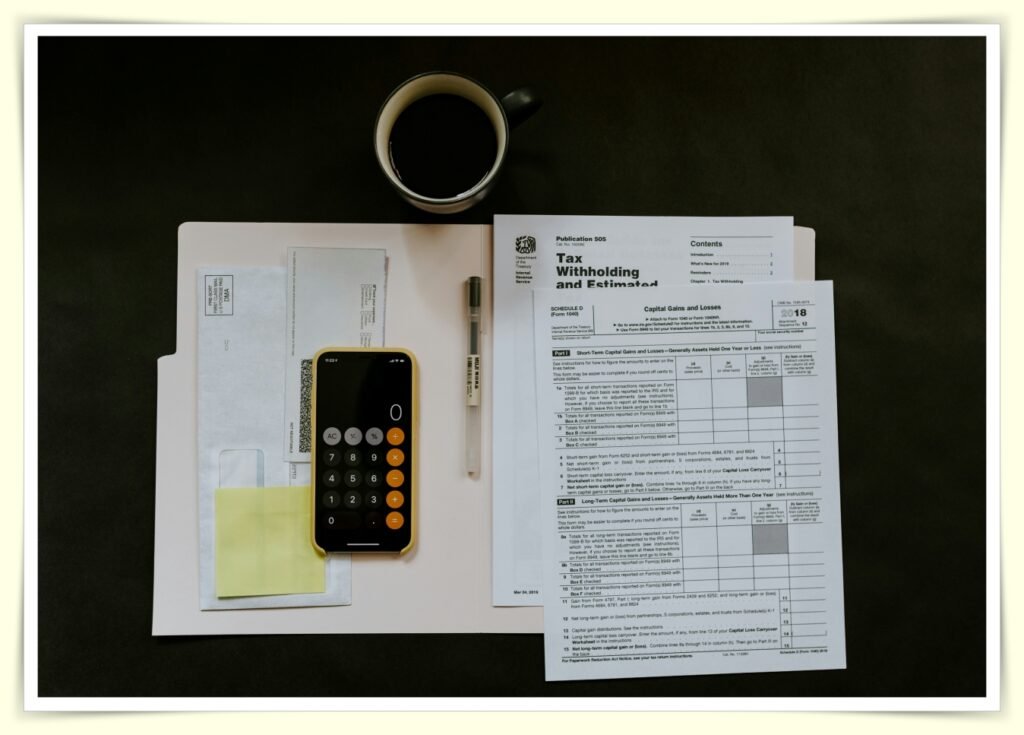
Roth IRAs come with income limits, and the IRS adjusts them every year. For tax year 2026, here is who can contribute the full amount.
- Single filers with modified adjusted gross income (MAGI) below $150,000 can contribute the full $7,000.
- Single filers with MAGI between $150,000 and $165,000 can contribute a reduced amount (phase-out range).
- Single filers with MAGI above $165,000 cannot contribute directly to a Roth IRA.
- Married filing jointly with MAGI below $236,000 can contribute the full $7,000 each.
- Married filing jointly with MAGI between $236,000 and $246,000 are in the phase-out range.
If you are 50 or older, the contribution limit jumps to $8,000 thanks to the catch-up rule. If your income is over the limit, you can use the backdoor Roth IRA strategy, but that involves a Traditional IRA first and a follow-up conversion. Most self-employed people, especially in their first few years, fall well under the cap and can contribute directly. Want to reduce your tax bill further? Check out how to save money on taxes legally.
To find your MAGI, take your gross self-employment income, subtract business expenses, deduct half of self-employment tax, subtract any health insurance deduction, and subtract Solo 401(k) or SEP IRA contributions. The number you are left with should sit comfortably under $150,000 for most freelancers and gig workers.
Step 2: Choose the Right Brokerage for Your Roth IRA
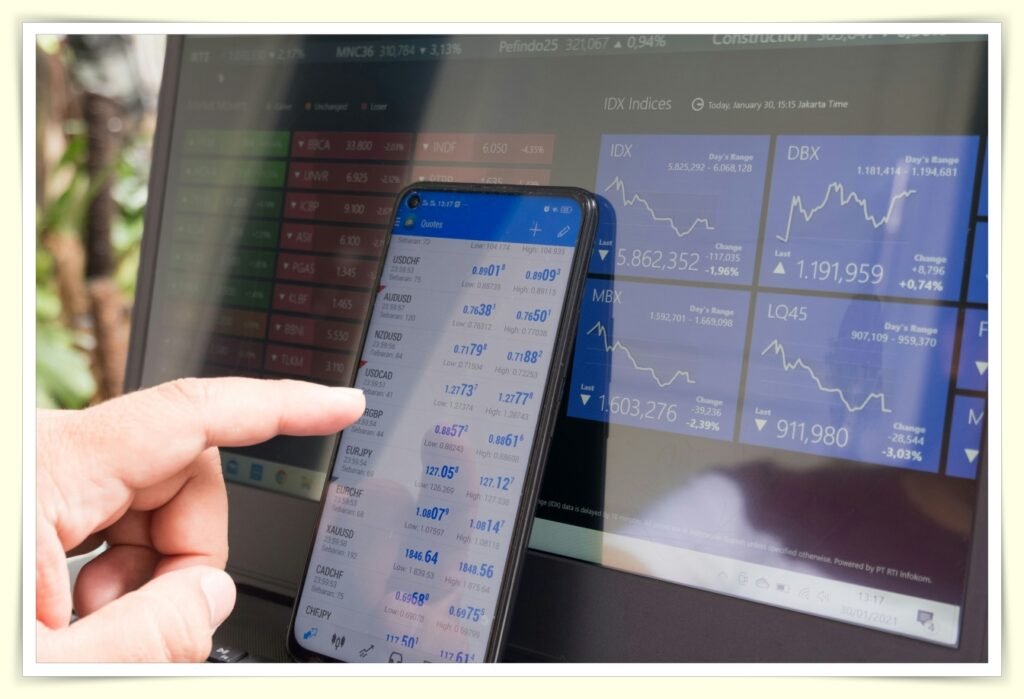
Three brokerages dominate Roth IRA accounts in 2026 because they all charge $0 to open and maintain the account, offer commission-free trades, and have no minimum balance.
Fidelity is the easiest pick for new investors. Their FZROX (Total Market) and FZILX (International) funds have a 0% expense ratio. You can open the account in 10 minutes online, link a bank, and place your first trade the same day.
Charles Schwab
Schwab is similar in fees and offers an excellent mobile app. Their SWTSX total market fund has a 0.03% expense ratio. Customer service ratings are consistently among the highest in the industry.
Vanguard pioneered low-cost index investing. Their VTI ETF and VTSAX mutual fund are gold standards. The interface is more dated than competitors, but the fund lineup is unbeatable for buy-and-hold investors.
Avoid robo-advisors that charge a 0.25% or higher management fee on top of fund expenses for your first Roth IRA. Once you have built up a balance, you can decide if hands-off management is worth the extra cost. As a self-employed person, the $25 to $50 a year in robo fees on a $10,000 balance could instead become groceries or business software.
Step 3: Open the Account in 15 Minutes
Once you pick a broker, the application is straightforward. You will need your Social Security number, government ID, bank routing and account numbers, and your business name if you operate as a sole proprietor under something other than your legal name. Self-employment income counts as earned income for Roth purposes, so freelance, 1099, gig, and small business income all qualify.
During the application, you will be asked about investment experience and risk tolerance. Be honest. If you select “none” or “limited,” the broker may restrict you from buying options or margin, which is exactly what you want as a beginner. Roth IRAs are not the place for risky speculation.
After you submit the application, the broker verifies your information in 1 to 2 business days. You can usually fund the account immediately via ACH transfer from your bank.
Step 4: Fund Your Roth IRA Without a Steady Paycheck
This is the part that trips up most self-employed people. You do not get a regular paycheck deduction, so contributions feel scary when income is uneven. Here are three workflows that work for irregular income.
Method 1: The Income-Percentage Pull
Every time a client pays you, transfer 10% to your Roth IRA before you do anything else. If a $3,000 invoice clears, $300 goes to the Roth that same day. Spread across the year, this gets most freelancers to the $7,000 maximum without the pain of writing one big check.
Method 2: The Quarterly Lump Sum
Self-employed people often pay estimated taxes on April 15, June 15, September 15, and January 15. Pair every quarterly tax payment with a $1,750 Roth contribution. By tax day the following year, you have hit the $7,000 limit on a predictable schedule.
Method 3: The Tax-Season Top-Up
If you do not need the cash flow help during the year, you have until April 15 of the following year to make your prior-year Roth contribution. Some freelancers wait until they finish their taxes, see their refund, and use that money to fund the previous year’s Roth. Just be sure to label the contribution year correctly in your broker dashboard.
Step 5: Pick Your Investments Inside the Roth IRA
A Roth IRA is just a tax wrapper. Once your money is in the account, you still have to invest it, otherwise it sits as cash earning a couple percent in a money market fund. For 99% of self-employed Americans in their 20s, 30s, and 40s, the simplest choice wins.
- Total US stock market index fund (VTI, FZROX, or SWTSX): 60-80% of your portfolio for diversified domestic exposure.
- Total international stock fund (VXUS or FZILX): 20-30% of your portfolio for global diversification.
- Bond fund (BND or AGG): 0-20% depending on age and risk tolerance, typically lower for younger investors.
If even that feels like too many decisions, buy a single target-date fund matched to the year you turn 65. The fund handles all the rebalancing automatically and adjusts the stock-bond mix as you age. Vanguard, Fidelity, and Schwab all offer target-date funds with expense ratios at or below 0.10%.
Step 6: Compare Roth IRA vs. Solo 401(k) for Bigger Years
Once your self-employment income climbs past $50,000 a year, the Roth IRA $7,000 limit can feel restrictive. That is when the Solo 401(k) becomes your second weapon. A Solo 401(k) lets you contribute up to $23,500 as the “employee” plus 25% of net self-employment income as the “employer,” with a combined cap of $70,000 in 2026.
Many self-employed people use both: max out the Roth IRA at $7,000, then dump the rest into a Solo 401(k). Some Solo 401(k) plans even offer a Roth designated account, giving you tax-free growth on the bigger contributions. Combining these two accounts can shelter $77,000 a year from future taxes, which is the kind of move that turns a side hustle into early retirement.
Frequently Asked Questions
Can I open a Roth IRA if I only do freelance or 1099 work?
Yes. The IRS only requires that you have “earned income” to contribute to a Roth IRA, and self-employment income (freelance, 1099, gig work, sole proprietor profits) absolutely counts. You will report this income on Schedule C of your Form 1040, and the broker will simply ask you to confirm you have earned income when you contribute. There is no need to provide W-2s.
How much should a self-employed person contribute to a Roth IRA each year?
If your income allows it, contribute the full $7,000 (or $8,000 if you are 50+). At a 7% average return, maxing out for 30 years grows to over $700,000, all tax-free. If $7,000 feels impossible, start with $50 to $100 a month and increase as your business grows. Even partial contributions matter because the cap does not roll over to future years.
Should I do a Roth IRA or a Solo 401(k) first?
Start with the Roth IRA. It is simpler to open, has lower fees, and the $7,000 contribution gives most new self-employed workers more than enough to learn the rhythm of long-term investing. Add a Solo 401(k) once your annual self-employment profit consistently exceeds $50,000 and you want to shelter more from taxes. Owning both is the ideal long-term setup for most successful freelancers.
Final Thoughts

Setting up a Roth IRA is the highest-leverage retirement move a self-employed person can make in their first decade of self-employment. The account costs nothing to open, the tax benefits compound for life, and the contributions stay accessible if you ever need them in a true emergency.
Pick one broker from this guide tonight, set aside 30 minutes tomorrow morning, and open the account before you finish your first cup of coffee. Then schedule a recurring transfer that matches your invoicing rhythm, set the investments to a low-cost index fund, and let compounding do the long work while you focus on building your business.