
We have all been there. It is the Friday your paycheck hits, and you feel completely unstoppable. You pay a few bills, treat yourself to a nice dinner, and maybe grab that thing you saw on TikTok.
Then, suddenly, it is Tuesday. You check your banking app, and your jaw drops. You are left staring at the screen, genuinely wondering if you were hacked or if you actually spent that much money in four days.
If you are a Millennial or Gen Z navigating today’s wild economy, this feeling is entirely relatable. Between high rent prices, student loans, and the rising cost of just existing, making your money stretch feels like an extreme sport.
You might have tried budgeting before, only to give up when it felt too restrictive or confusing. Traditional budgets often feel like a diet that tells you exactly what you cannot have. But what if there was a better way to manage your cash?
That is exactly where a different strategy comes into play. It is time to stop wondering where your money went and start telling it exactly where to go.
What is Zero Based Budgeting and How Does It Work?
If you are looking for a financial glow-up, you are probably asking: What is Zero Based Budgeting and How Does It Work? The concept is actually beautifully simple.
Zero-based budgeting is a money management method where your income minus your expenses equals zero. You are not aiming to have zero dollars in your bank account, but rather zero dollars left unassigned in your budget.
Instead of just paying your bills and hoping you have enough left over for savings or weekend plans, you give every single dollar a specific job. Before the month even begins, you decide exactly how you will spend, save, or invest your money.
Think of your monthly income as a team of employees. If you do not give your employees specific tasks, they will just wander around and get nothing done. Your money acts the exact same way.
When you use a zero-based budget, you might assign $1,200 to the “Rent” job, $300 to the “Groceries” job, and $150 to the “Late Night Taco Delivery” job.
Yes, you can still budget for fun! The goal is simply to ensure that by the time you assign all your dollars to different categories, you have exactly $0 left to allocate. Every cent has a clear purpose.
The 4 Simple Steps to Build Your First Zero-Based Budget
Starting a zero-based budget does not require a degree in finance. You just need a piece of paper, a spreadsheet, or a budgeting app.
Step 1: Figure out your take-home pay.
Look at exactly how much money actually hits your bank account each month after taxes. If you have a side hustle, freelance gigs, or sell clothes online, estimate your average monthly earnings from those, too.
Step 2: List your essential bills.
Write down the expenses you absolutely have to pay to survive. This includes your rent or mortgage, utility bills, groceries, basic transportation, and minimum debt payments. These are your non-negotiables.
Step 3: Plan for your lifestyle and fun.
This is where you budget for the things that make life enjoyable. Include categories for eating out, entertainment, subscriptions, hobbies, and shopping. Be honest with yourself about what you actually spend here.
Step 4: Assign the rest to your financial goals.
If you have money left over after listing your needs and wants, do not just leave it sitting there! Assign those remaining dollars to your goals, like building an emergency fund, paying off extra student loan debt, or investing.
Real-Life Examples: Let’s Run the Numbers
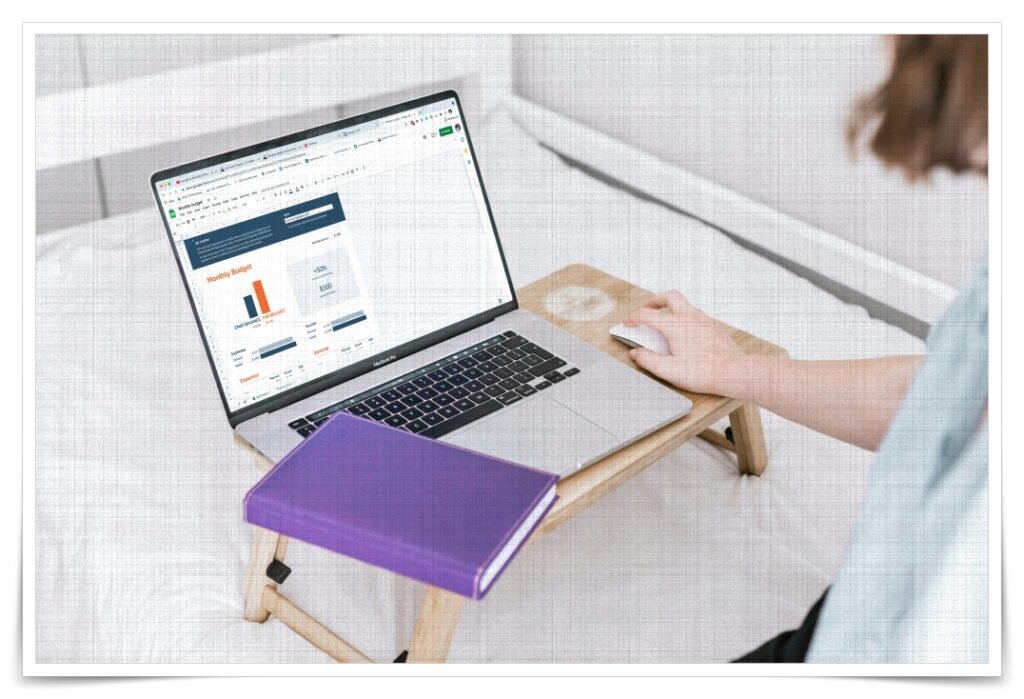
Sometimes, the best way to understand a new money concept is to see it in action. Let’s look at two totally normal, real-world examples to show you how the math works.
Example 1: Maya, a 24-year-old making $3,200 a month
Maya lives with a roommate, loves going to concerts, and is actively trying to pay off her credit card. She needs her budget to balance perfectly to $0.
- Income: $3,200
- Rent & Utilities: $1,100
- Groceries & Household: $400
- Car Payment & Gas: $350
- Student Loan Minimum: $200
- Dining Out & Concerts: $300
- Personal Care & Shopping: $150
- Subscriptions (Spotify, Netflix): $50
- Extra Credit Card Payment: $400
- Emergency Fund Savings: $250
- Total Expenses & Savings: $3,200 (Amount left over = $0)
Example 2: Jordan and Alex, a couple making $6,500 a month
Jordan and Alex are saving up for a down payment on a house and want to keep a close eye on their combined spending.
- Income: $6,500
- Rent & Utilities: $2,200
- Groceries & Household: $700
- Transportation (Gas & Transit): $400
- Insurance (Auto & Renters): $200
- Debt Payments: $600
- Date Nights & Entertainment: $400
- Gym & Wellness: $150
- Travel Fund: $350
- House Down Payment Savings: $1,500
- Total Expenses & Savings: $6,500 (Amount left over = $0)
In both examples, every dollar has a name and a destination. If Maya decided she wanted to spend $400 on concerts this month instead of $300, she would have to subtract $100 from another category to keep the budget at zero.
Top 5 Free Budgeting Apps to Crush Your Goals in 2026
You do not have to do all this math in your head. Thankfully, there are tons of free apps designed specifically to make zero-based budgeting incredibly easy.
Here are the top 5 free budgeting apps for 2026, perfectly suited for Millennials and Gen Z:
| Budgeting App | Best Feature | Why It Works for You |
| EveryDollar | True zero-based budgeting | Built specifically for this method. It is incredibly clean, easy to use, and lets you drag and drop your income into categories. |
| Goodbudget | Digital envelope method | Great if you are visual. You fund digital “envelopes” for groceries or fun, and stop spending when the envelope is empty. |
| PocketGuard | “In My Pocket” tracker | Does the heavy lifting by calculating your bills and telling you exactly how much disposable cash is safe to spend today. |
| Rocket Money | Subscription tracking | Identifies all those sneaky subscriptions you forgot about and actually helps you cancel them to free up more budget cash. |
| Honeydue | Budgeting for couples | Lets you and your partner see shared expenses and chat about specific transactions right inside the app. |
EveryDollar is often considered the gold standard for zero-based budgeting because it was quite literally built for this exact method. The free version requires you to manually enter transactions, which actually forces you to be mindful of your spending. Another popular zero-based budgeting app is YNAB (You Need A Budget).
Goodbudget takes the old-school “cash envelope” system and brings it to your smartphone. If your “dining out” envelope runs out of funds, you know you are cooking at home until the next month.
PocketGuard is amazing if you tend to get overwhelmed by numbers. Its main feature simply tells you how much money is “in your pocket” for the week after all your serious bills are accounted for.
Rocket Money is a lifesaver for the modern digital consumer. If you are paying for three different streaming services you never watch, this app will find them and help you slash those costs.
Honeydue takes the awkwardness out of managing money in a relationship. You can link your accounts, split bills, and even send a cute emoji when your partner pays the internet bill on time.
Frequently Asked Questions (FAQ)
1. What if my income changes every month?
If you are a freelancer, server, or gig worker, zero-based budgeting is actually perfect for you. Instead of guessing your income, you budget using the money you actually made the previous month. Alternatively, you can build your budget based on your lowest expected income, and any extra money you make gets assigned straight to savings or debt.
2. Do I really have to track every single coffee I buy?
In the beginning, yes. Tracking every transaction builds awareness and shows you your true habits. However, once you get the hang of it, you can simplify. You might just create a “Coffee/Snacks” category, put $50 in it, and stop buying lattes once that specific $50 is gone.
3. What happens if I mess up and overspend?
Take a deep breath! You are going to mess up, and that is completely normal. A budget is not a rigid cage; it is a flexible plan. If your car breaks down or you overspend on a night out, simply adjust your budget mid-month. Move money from your “clothing” or “entertainment” category to cover the difference so you still equal zero.

Time to Give Every Dollar a Job
Taking control of your finances does not have to be scary, boring, or restrictive. It is really just about being honest with yourself and making your money work for the life you actually want to live.
By using a zero-based budget, you completely eliminate the anxiety of checking your bank account. You will finally know exactly where your hard-earned money is going, because you are the one putting it there.
Remember, budgeting is a marathon, not a sprint. It takes most people about three months to really get the hang of zero based budgeting, so give yourself grace as you learn.