How to Save Money on Food Without Coupons: Real Strategies That Work Every Week. Coupons get a lot of attention in the personal finance world — and for good reason. But the truth is, most people aren’t going to spend hours clipping coupons or chasing sales flyers every week. If that’s you, you’re not alone, and you’re not out of luck. There are plenty of ways to slash your grocery and food spending without touching a single coupon.
The average American household spends about $475 per month on food — $350 at the grocery store and another $125 or more eating out. That’s over $5,700 a year, and for a lot of families, it’s the third-biggest expense after housing and transportation. The good news is that food is one of the most flexible categories in your budget. With a few smart habits, many households can cut their food spending by $100 to $200 per month — no coupons required.
Here’s exactly how to do it.
1.Plan Your Meals Before You Shop — Every Single Week
Meal planning is the single most powerful money-saving habit when it comes to food, and it requires zero coupons. The reason it works is simple: when you know exactly what you’re going to eat, you only buy what you actually need. No impulse purchases, no mystery ingredients that go bad in the back of the fridge, no “I have no idea what to make” moments that send you straight to DoorDash.
Here’s the basic process that takes about 15 minutes once a week:
Check what you already have in your pantry, fridge, and freezer first.
Plan 5–7 dinners based on what you already own plus a few fresh ingredients.
Write a specific shopping list tied to those meals — nothing more, nothing less.
Stick to the list when you’re in the store.
Studies show that households with a weekly meal plan spend an average of 23% less on groceries than those who shop without a plan. For someone spending $350/month at the grocery store, that’s $80 per month in savings — no coupons needed.
A few tools that make this even easier: the Mealime app (free) builds shopping lists automatically from your meal plan. EveryPlate or other meal kit services can also inspire ideas even if you don’t subscribe — browse their weekly menus for recipe inspiration and then buy the ingredients yourself for a fraction of the cost.
2. Shop at the Right Stores (It Matters More Than You Think)
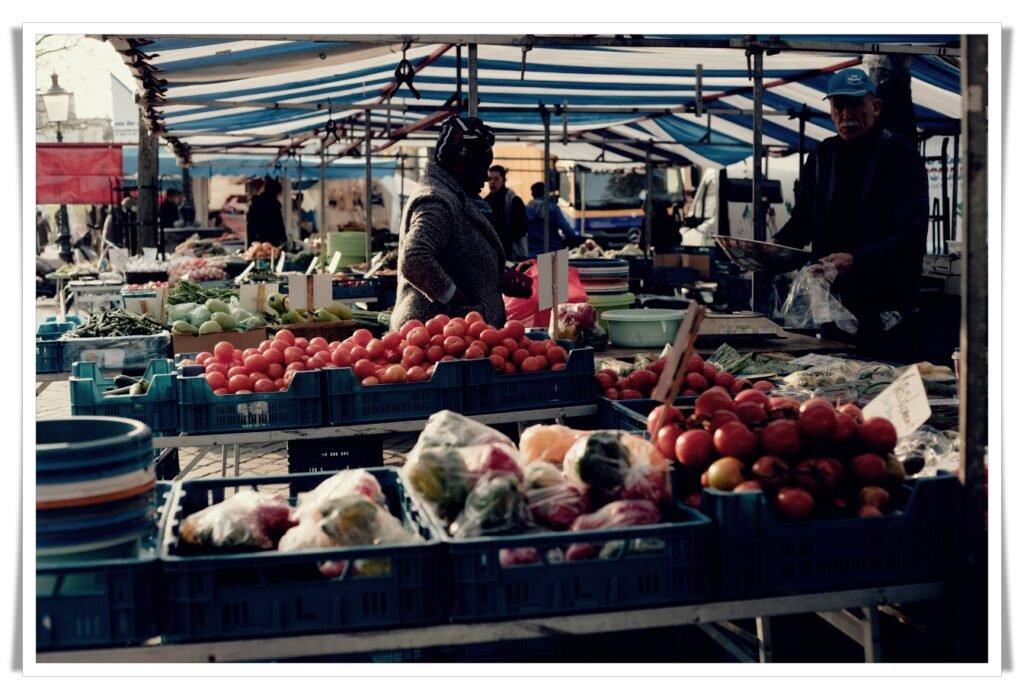
Not all grocery stores charge the same prices. In fact, the same basket of groceries can vary by 30% to 50% depending on where you shop. Choosing a more affordable store — even just for staples — can save you hundreds of dollars per year without changing what you eat at all.
Generally speaking, here’s how stores rank from lowest to highest prices in the U.S.:
- Lowest: Aldi, Lidl, WinCo Foods, Market Basket
- Middle: Walmart, Costco/Sam’s Club (for bulk items), Trader Joe’s
- Higher: Kroger, Safeway, Publix (varies by region)
- Most expensive: Whole Foods, Sprouts, specialty stores
If you’re currently shopping primarily at mid-to-high-end stores, switching to Aldi or Walmart for your weekly staples can easily save $60 to $120 per month on a typical family grocery budget. Many families use a hybrid approach: shop at Aldi or Walmart for 80% of their groceries, and hit a preferred store for specialty items they can’t find elsewhere.
Warehouse clubs like Costco or Sam’s Club are worth considering if you have the storage space. For non-perishable staples — paper products, cooking oils, spices, canned goods, frozen proteins — the per-unit price is often 20% to 40% lower than regular grocery stores. A $65 annual membership at Costco typically pays for itself within the first 1–2 shopping trips.
3.Reduce Food Waste — The Hidden Money Drain
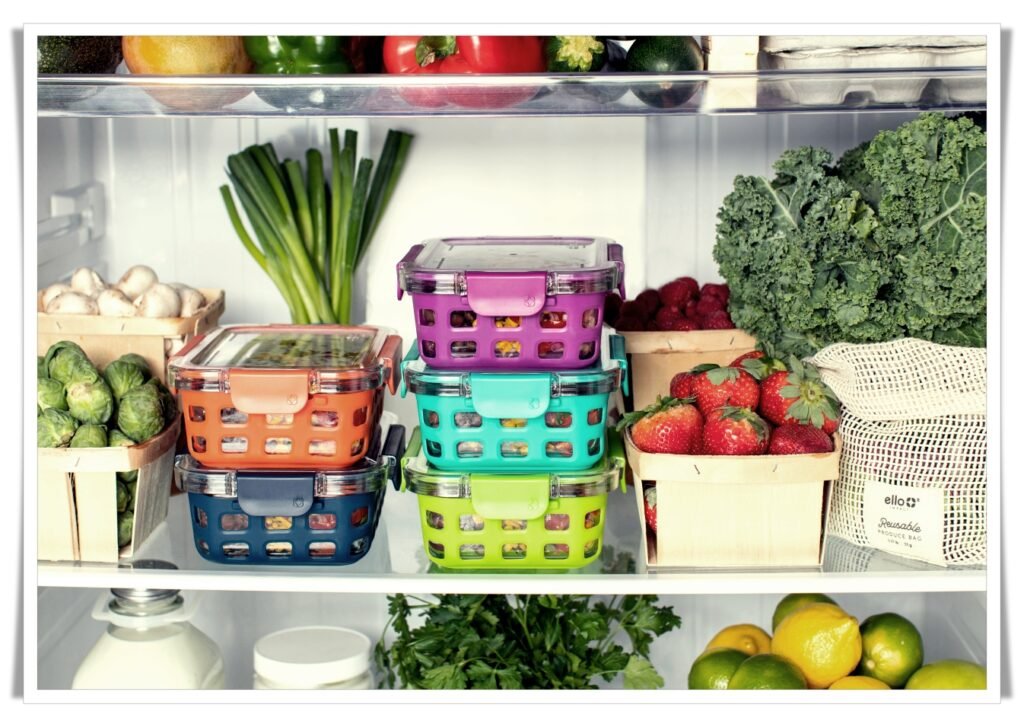
Here’s a number that should shock you: the average American household throws away approximately $1,500 worth of food per year. That’s money you already paid for that ended up in the trash. Cutting food waste in half — which is very achievable with a few habit changes — could save you $750 annually, or about $62 per month.
The biggest culprits of food waste are fresh produce, leftover meals, and items bought on impulse that never get used. Here’s how to stop throwing money away:
- Store produce correctly. Most fruits ripen at room temperature, so keep them out of the fridge until they’re ready. Leafy greens stay fresh longer wrapped in a paper towel inside a sealed bag. Berries last longer if you don’t wash them until right before eating.
- Use the FIFO method (First In, First Out). When you unpack groceries, move older items to the front and put new purchases behind them so you use older food first.
- Freeze before it goes bad. Bread, meat, cheese, overripe bananas, and many leftovers freeze beautifully. When something is a few days from expiring, freeze it instead of letting it rot.
- Do a weekly “use it up” meal. One dinner per week built around whatever needs to be eaten — the random vegetables, the leftover rice, the open can of beans — can eliminate most of your food waste and doubles as a no-grocery-shopping meal.
- Keep a running “eat this first” list on the fridge. A dry-erase board or sticky note listing what needs to be used up helps everyone in the household prioritize before grabbing something new.
4.Cook in Bulk and Embrace Leftovers
One of the most reliable ways to eat well and spend less is to cook larger portions intentionally and plan for leftovers. Cooking in bulk means you spend the same amount of time in the kitchen but get multiple meals out of the effort — which directly eliminates the temptation to order takeout on busy weeknights.
Batch cooking doesn’t have to mean meal prepping five identical containers of the same thing. It just means scaling up what you’re already making. If you’re cooking chicken thighs on Sunday, make double the amount. The leftovers become Tuesday night’s dinner and Wednesday’s lunch without any extra shopping or planning.
A few batch-cooking strategies that save significant money:
- Make a big pot of grains once a week (rice, quinoa, farro) that can be used across multiple meals — as a side dish, in grain bowls, in soups, or as a base for stir-fry.
- Cook dried beans from scratch instead of buying canned. A $2 bag of dried beans makes the equivalent of 4–5 cans worth of cooked beans, saving you $6 to $8.
- Make soups and stews in large batches. They freeze well, reheat perfectly, and are one of the most cost-efficient meals you can make — a pot of vegetable lentil soup that costs $8 to make can feed a family of four for two meals.
- Designate one or two “leftover nights” per week as intentional meals, not as an afterthought. This alone can eliminate one to two evenings of takeout spending per week.
5. Cut Back on Eating Out Strategically
Eating out is the fastest way to inflate your food budget. The average restaurant meal costs 3–5 times more than cooking the same food at home, and delivery apps add another 30% to 40% on top of that with fees, tips, and markups. If you’re spending $200 or more per month on restaurants and delivery, this is likely your single biggest opportunity for food savings.
The goal isn’t to eliminate eating out — it’s to make it intentional rather than a default. Here are practical ways to reduce dining spending without feeling deprived:
- Set a specific eating-out budget and track it. Just knowing the number often naturally reduces spending.
- Uninstall food delivery apps. When delivery requires opening a browser instead of tapping an app icon, impulse orders drop significantly.
- Choose lunch over dinner when you do eat out. The same restaurant typically charges 20–30% less at lunch, and portions are similar.
- Cook your “restaurant favorites” at home once a month. Homemade tacos, pizza, or burgers feel like a treat and cost a fraction of the price.
- Use the “one meal rule” on busy weeks: instead of ordering delivery for the whole family when you’re tired, commit to making one simple meal — eggs and toast, pasta with jarred sauce, quesadillas. Fast, cheap, done.
- If you can shift from eating out 4 times per week to twice per week, and replace delivery with cooking just twice more weekly, you could easily save $150 to $250 per month on food alone.
6.Buy Cheaper Proteins and Seasonal Produce
Protein is usually the most expensive part of any grocery cart. Beef, salmon, and shrimp are delicious, but building your meals around cheaper protein sources — even a few times per week — can dramatically cut your food costs without sacrificing nutrition.
Affordable protein options that should be on your regular rotation:
- Eggs: One of the cheapest, most versatile proteins available — about $0.25–$0.40 per egg depending on your area.
- Dried or canned beans and lentils: $0.10–$0.25 per serving of protein — incredibly nutritious and satisfying.
- Canned tuna and sardines: $1–$2 per can with solid protein content.
- Chicken thighs (bone-in): Often $1.49–$2.49/lb, compared to $4–$6/lb for boneless chicken breast. Juicier and more flavorful, too.
- Pork shoulder and ground pork: Significantly cheaper than beef and work well in most recipes that call for ground meat.
For produce, buying what’s in season locally is almost always cheaper than buying out-of-season items that were shipped from far away. Frozen vegetables are also an excellent, budget-friendly alternative — they’re picked at peak ripeness, nutritionally equivalent to fresh, and cost significantly less. A 12-oz bag of frozen broccoli for $1.50 beats fresh broccoli at $2.99 per head any day.
Frequently Asked Questions
Q: How much can I realistically save on food without coupons?
Most households can cut their grocery and food spending by $100 to $250 per month just by implementing meal planning, reducing food waste, shopping at more affordable stores, and cooking more at home. For a family of four currently spending $700 to $900 per month on all food costs, savings of 20% to 30% are very achievable within 2–3 weeks of making consistent changes. The biggest wins usually come from reducing takeout and delivery spending, which is often underestimated in household budgets.
Q: Is Aldi actually good quality, or am I sacrificing quality to save money?
Aldi consistently ranks as one of the highest-rated grocery stores for quality relative to price in consumer surveys. Their private-label products go through rigorous quality testing and often match or beat name-brand quality. Items like Aldi cheese, produce, and packaged staples regularly receive strong reviews. Aldi carries fewer products than a traditional grocery store (which is part of why they can keep prices so low), but for the staples that make up the majority of most people’s grocery carts, quality is excellent.
Q: What’s the fastest way to start saving money on food this week?
The single fastest change you can make right now is to do a meal plan before your next grocery trip. Spend 15 minutes writing down what you’ll eat for the next 5–7 days based on what you already have at home, then write a shopping list for only what you need to complete those meals. Stick to the list in the store. That single habit — consistently applied — typically saves $50 to $100 on the very first shopping trip for most households that aren’t already doing it.
Small Shifts, Big Savings
Saving money on food doesn’t require extreme measures, a coupon binder, or hours of preparation. It requires a few consistent habits: plan your meals, shop at affordable stores, cook more at home, waste less, and eat out intentionally rather than impulsively.
Pick two or three strategies from this list and apply them for the next two weeks. Check your food spending at the end of the month. The results will speak for themselves — and once you see $100 or more back in your budget, you’ll have all the motivation you need to keep going.
That extra money can go directly toward your savings goals, your emergency fund, or paying off debt faster. The food budget is one of the most flexible lines in your monthly expenses — and it’s entirely in your control.