
How to Save Money on Clothes and Fashion. Clothing is one of the sneakiest budget categories. Individual purchases seem small — a $35 top here, a $60 pair of jeans there — but they add up faster than almost any other discretionary category. The average American spends $1,800–$2,400 per year on clothing and shoes. For fashion-conscious shoppers or people who frequently replace fast fashion pieces, the number is much higher. And much of it is wasted on items that sit in the closet unworn.
The good news is that looking great doesn’t require spending a fortune. With the right strategy — combining thrift shopping, sale timing, wardrobe planning, and smart apps — you can dress well for a fraction of what you’re currently spending. Here’s exactly how.
Build a Capsule Wardrobe Instead of Buying Constantly
One of the most powerful ways to spend less on clothes is to buy less, but better. The capsule wardrobe concept focuses on building a core collection of 30–40 versatile, high-quality pieces that mix and match easily — rather than constantly chasing trends and accumulating low-quality items. Read our guide on how to stop overspending on things you don’t need.
Core capsule wardrobe categories:
- Neutral basics: White, black, navy, and gray pieces in simple cuts work with everything.
- Quality over quantity: One $80 well-made pair of jeans that lasts 5 years costs less per wear than three $30 pairs that fall apart in a year.
- Versatile pieces: Items that work for multiple occasions (work, casual, going out) maximize cost-per-wear.
- Limited trendpieces: If you want trendy items, buy them secondhand for much less — you’re going to outgrow the trend anyway.
People who switch to a capsule wardrobe approach consistently report spending 40–60% less on clothing annually. Buying 5 excellent pieces per season beats buying 20 mediocre ones — and you’ll feel better about your wardrobe too.
Shop Secondhand First — Always
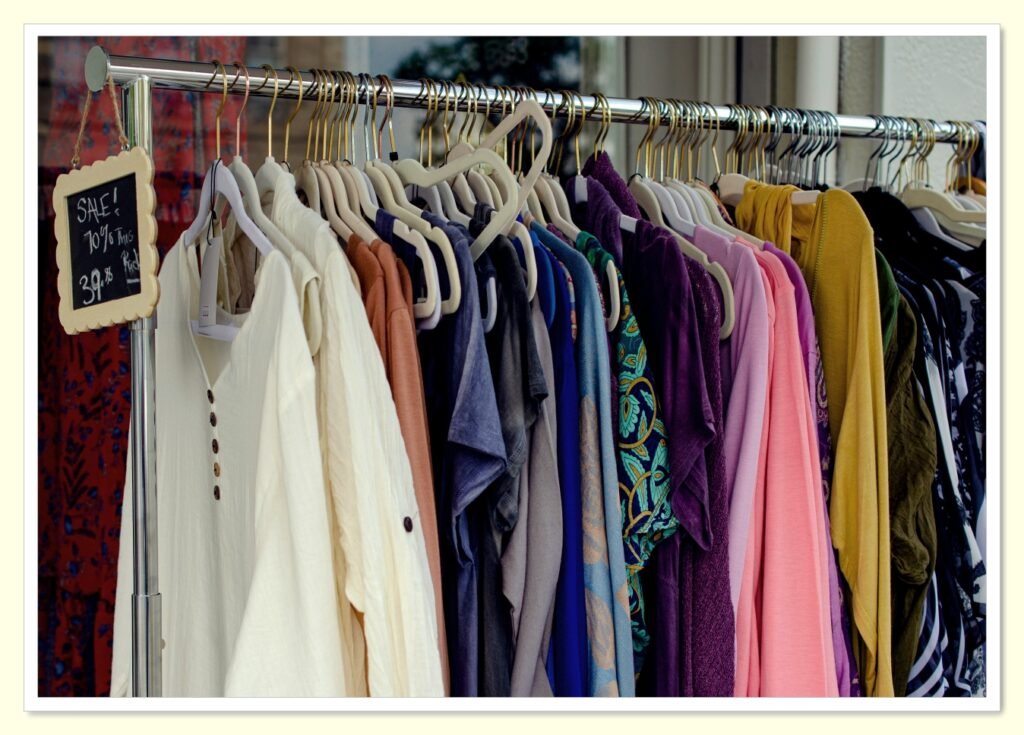
Thrift stores and resale apps have become genuinely excellent places to find quality clothing. Designer brands, barely-worn basics, and on-trend pieces regularly show up at 70–90% off retail. The stigma around secondhand shopping is largely gone — many fashion-forward people shop secondhand exclusively.
Best places to shop secondhand clothing:
- ThredUp: Online thrift store with a huge inventory, searchable by brand, size, and style. Good for everyday basics.
- Poshmark: Peer-to-peer resale, great for brands and name-brand pieces. You can also sell here.
- Depop: Skews younger and trendier; great for vintage and Y2K aesthetic pieces.
- Facebook Marketplace and local thrift stores: Best prices, requires browsing in person.
- The RealReal, Vestiaire Collective: Authenticated luxury secondhand if that’s your thing.
The key is checking secondhand first. Before buying anything new, spend 5 minutes searching for it on Poshmark or ThredUp. For most items, you’ll find nearly identical options for 50–80% less. A $120 new dress often appears on ThredUp for $18–$35.
Learn the Best Times of Year to Buy New Clothing
If you do buy new, timing matters enormously. Retailers follow predictable seasonal sale cycles, and buying during those windows can save you 30–70% compared to peak prices.
Best times to buy specific items:
- Winter coats and cold-weather gear: January–February (post-holiday clearance, 40–70% off)
- Summer clothing: August–September (end-of-season clearance)
- Jeans and denim: April and October (mid-season refreshes with steep discounts)
- Athletic/workout wear: January (New Year sales) and May–June (clearance before summer)
- Formal wear: After prom season (May–June) and after wedding season (October–November)
General sale events worth waiting for:
- Black Friday/Cyber Monday: 30–50% off sitewide at most major retailers
- End-of-season clearance: Biggest discounts of the year, but limited selection
- Memorial Day and Labor Day: Traditional retail sale weekends
- Amazon Prime Day: Now runs twice yearly and includes clothing brands
Buying a winter coat in January instead of October saves 50% on average. If you need something urgently, resist impulse buying by using browser extensions like Honey or Capital One Shopping to automatically find discount codes at checkout.
Use Cash-Back Apps and Browser Extensions for Every Clothing Purchase
When you do shop online for clothing, leaving money on the table by not using cash-back tools is unnecessary. These tools are free and take seconds to set up.
- Essential tools for clothing discounts:
- Rakuten: Browser extension that activates automatically at checkout and offers 1–15% cash back at hundreds of clothing retailers. Pays out quarterly.
- Honey: Automatically tests coupon codes at checkout. Part of PayPal now, widely available.
- Capital One Shopping: Similar to Honey, finds and applies best available codes plus tracks price drops.
- Ibotta: Cash back on in-store clothing purchases through the app at stores like Old Navy, Gap, H&M.
Many major clothing retailers offer first-purchase discounts (10–20% off) when you sign up for their email or text list. Sign up, get the discount, then unsubscribe if you don’t want ongoing marketing emails. Common first-purchase discounts:
- H&M: 10% off first purchase + birthday discount
- Gap / Old Navy / Banana Republic: 20–40% off first order
- Nike: 10% off first app purchase
- ASOS: Regular first-purchase discounts for new accounts
Sell What You Don’t Wear to Fund New Purchases
Your closet probably contains $200–$1,000+ worth of unworn clothing. Selling it on resale apps generates real cash that can fund new purchases — meaning you effectively shop for free or at drastically reduced cost.
How to make the most from selling clothes:
- Poshmark: Best for brand-name and contemporary pieces. Take bright, clear photos against a neutral background. Price slightly above your target — buyers will offer lower.
- ThredUp Clean Out: Mail in a bag of clothes; ThredUp evaluates and lists them. Lower effort but also lower returns (they take a significant commission).
- Facebook Marketplace: Best for higher-value individual pieces in your local area. No shipping hassle.
- Local consignment shops: Get paid immediately for accepted items, no selling work involved.
A solid closet cleanout twice per year can generate $100–$500+ in resale proceeds. That’s a meaningful clothing budget funded entirely by items you weren’t using. Many people follow the ‘one in, one out’ rule: whenever they buy something new, they sell something old. This keeps the closet from growing and keeps the clothing budget roughly neutral.
Avoid Fast Fashion — It Costs More in the Long Run
Fast fashion looks cheap upfront but is expensive over time because the pieces deteriorate quickly and need constant replacement. A $12 Shein top that survives 3 washes costs more per wear than a $40 basic from a mid-quality brand that lasts 3 years.
The environmental cost aside, here’s the financial case against fast fashion:
- Low-quality pieces often pill, shrink, fade, or fall apart after 5–15 wears.
- The temptation to buy more is higher because items are cheap — leading to overconsumption.
- Fast fashion rarely retains resale value, making it unsellable secondhand.
Instead, shop mid-quality brands at sale prices or secondhand. A $60 J.Crew shirt bought for $15 on ThredUp will last for years and can eventually be resold for $8–$12. That’s a fraction of the true cost per wear of cheap fast fashion.
Frequently Asked Questions
How much should I budget for clothing each month?
A commonly recommended guideline is 2–5% of your take-home pay on clothing and accessories. For someone taking home $3,000/month, that’s $60–$150/month. However, many people can do well with $50–$75/month if they shop secondhand, time sales well, and focus on quality basics. The actual number depends on your lifestyle, dress code at work, and how much of your social identity is tied to fashion.
Is thrift shopping actually worth the effort?
For most people, yes — especially using online resale platforms that do the sorting work for you. ThredUp and Poshmark let you filter by brand, size, and style, making it nearly as efficient as shopping retail. The savings are real: most pieces cost 50–90% less than retail. For someone spending $200/month on clothing, consistently shopping secondhand can easily cut that to $60–$80/month for equivalent items.
What’s the best way to stop impulse buying clothes?
The 30-day rule works well for clothing: add the item to a wishlist or save the listing, wait 30 days, and see if you still want it. Most impulse fashion urges fade in a few days. Also, unsubscribe from retail email lists (they’re engineered to trigger purchases), unfollow brands on social media that consistently trigger shopping urges, and delete shopping apps from your phone. Friction between impulse and purchase is your best friend.

Conclusion: Look Great Without the Financial Guilt
You don’t have to choose between having a wardrobe you love and keeping your finances healthy. By shifting your shopping habits — secondhand first, sale timing second, basics over trends — you can dress exactly the way you want while spending a fraction of what the average person spends.
Start this week with a closet audit. Pull out everything you haven’t worn in the past 6 months, list the best pieces on Poshmark, and use those proceeds to fund one intentional, quality purchase. That cycle — sell, buy better, wear more — is the foundation of a fashion-forward wardrobe that doesn’t break the bank. Put your clothing savings toward a money saving challenge this year.