How to Lower Your Electric Bill, If your electricity bill has been creeping up every month, you’re not imagining it. The average American household pays around $137 per month for electricity — and in states like Connecticut or Hawaii, that number can easily climb to $200 or more. With energy prices rising and summer cooling seasons getting longer, your electric bill can quietly become one of the biggest drains on your monthly budget.
The good news is that lowering your electric bill doesn’t require a complete home renovation or a massive upfront investment. Most of the strategies in this guide cost little to nothing and take less than an hour to implement. Done consistently, they can cut your electricity costs by 20% to 40% — that’s potentially $30 to $55 back in your pocket every single month, or up to $660 per year.
Whether you rent an apartment or own a home, these practical tips will help you take control of your energy costs and keep more of your paycheck where it belongs.
1. Understand Your Electric Bill Before You Try to Cut It
Before you can lower your bill, you need to know what’s actually driving it up. Most people have no idea which appliances or habits are responsible for the biggest chunks of their electricity costs — and that makes it nearly impossible to fix the right things.
Pull up your last two or three electric bills and look at your kilowatt-hour (kWh) usage. The U.S. Energy Information Administration (EIA) reports that the average household uses about 886 kWh per month. If you’re well above that, something specific is likely driving your costs up.
Here’s a rough breakdown of where electricity typically goes in a U.S. home:
- Heating and cooling (HVAC): 45–55% of total electricity usage
- Water heater: 14–18%
- Lighting: 9–12%
- Appliances (refrigerator, washer/dryer, dishwasher): 13–15%
- Electronics and devices: 4–6%
Once you know the biggest energy hogs in your home, you can target those areas first for the biggest savings. A smart plug with energy monitoring — available for about $10 to $15 on Amazon — can tell you exactly how much electricity any device is using in real time.
2. Tackle Your Heating and Cooling Costs First
Since HVAC accounts for nearly half your electricity bill, this is the single best area to focus your energy-saving efforts. Even small changes here can produce dramatic results on your monthly statement.
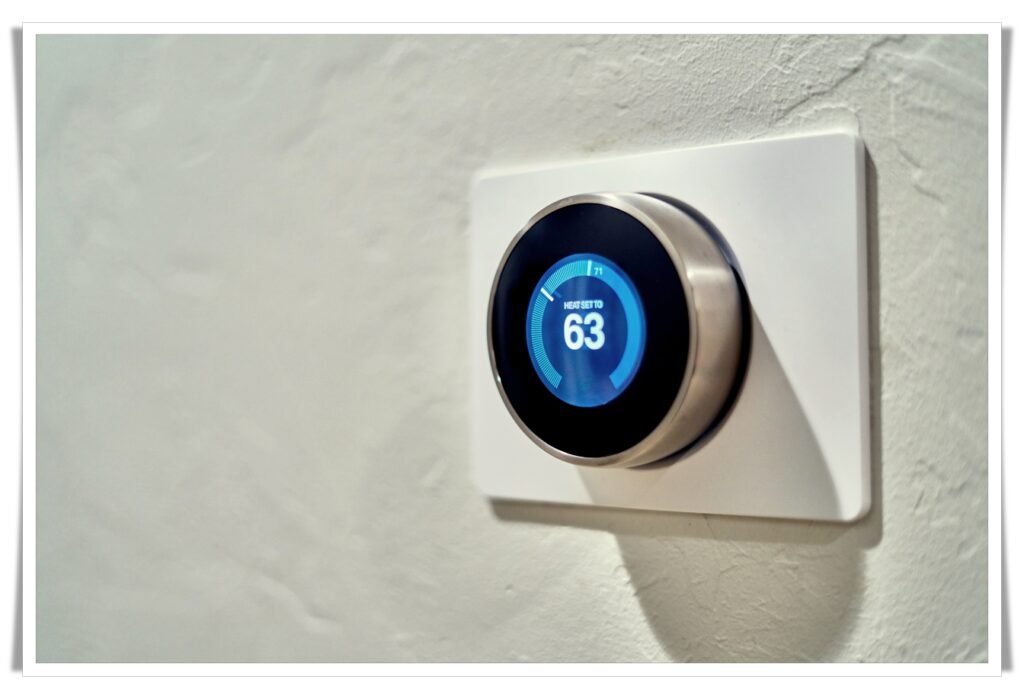
The most impactful thing you can do is install a programmable or smart thermostat. The U.S. Department of Energy estimates that adjusting your thermostat by 7–10 degrees Fahrenheit for just 8 hours a day can save up to 10% on your annual heating and cooling costs. That’s over $160 a year for the average household — and a basic programmable thermostat costs as little as $25 at any hardware store.
If you can swing the upfront cost, a smart thermostat like the Google Nest or Ecobee ($130–$250) pays for itself in energy savings within 1–2 years and then keeps saving money indefinitely
Beyond the thermostat, here are other HVAC-related changes that make a real difference:
- Change your air filter every 1–3 months. A clogged filter forces your HVAC system to work harder, using more electricity. Filters cost $5–$20 and are one of the easiest DIY tasks you can do.
- Seal air leaks around windows, doors, and outlets with weatherstripping or caulk. The EPA estimates that sealing air leaks can reduce energy bills by up to 15%.
- Use ceiling fans strategically. In summer, run fans counterclockwise to create a cooling breeze. In winter, reverse the direction to push warm air down from the ceiling. Fans use about 75% less energy than air conditioning.
- Keep blinds and curtains closed during the hottest parts of summer days to block solar heat gain. In winter, open south-facing blinds during daylight to let in free solar warmth.
- Don’t cool or heat rooms you’re not using. Close vents in empty rooms and keep those doors shut.
3.Switch to LED Lighting Everywhere
If you’re still using incandescent or CFL bulbs anywhere in your home, switching to LED is one of the fastest and cheapest ways to reduce your electric bill. LED bulbs use 75% less energy than incandescent bulbs and last 15–25 times longer, according to the Department of Energy.
The math is straightforward: a 60-watt incandescent bulb costs about $1.25 per month to run if used 5 hours per day. An equivalent LED uses only 8–10 watts and costs about $0.17 per month to run. Multiply that across 20 or 30 bulbs in your home and you’re looking at savings of $20 to $30 every month.
LED bulbs now cost as little as $1.50 to $4 each, which means each bulb pays for itself within 1–2 months and then saves you money for years. You can buy multi-packs at Costco, Home Depot, or Amazon for even cheaper per-unit costs.
Beyond bulb type, here are a few other smart lighting habits to adopt:
- Turn off lights whenever you leave a room. This sounds obvious, but it’s one of the most commonly skipped steps.
- Use natural daylight as much as possible during daytime hours.
- Install motion-sensor switches in hallways, bathrooms, and garages so lights automatically turn off when the room is empty.
- Use dimmer switches where possible — running lights at 75% brightness uses about 20% less electricity.
4. Stop Paying for Phantom Power (Standby Energy Drain)
Here’s something most people don’t realize: your electronics and appliances are using electricity even when they’re turned off. This is called phantom load or standby power, and it accounts for about 10% of the average American home’s total electricity use — costing the typical household around $100 to $200 per year without them even knowing it.
Devices that are notorious for phantom load include:
Cable boxes and satellite receivers (often the worst offenders — using almost as much power off as on)
Gaming consoles left in standby mode
TVs, especially older plasma models
Chargers left plugged in without a device connected
Microwaves and coffee makers with digital displays
Home office equipment (computers, monitors, printers)
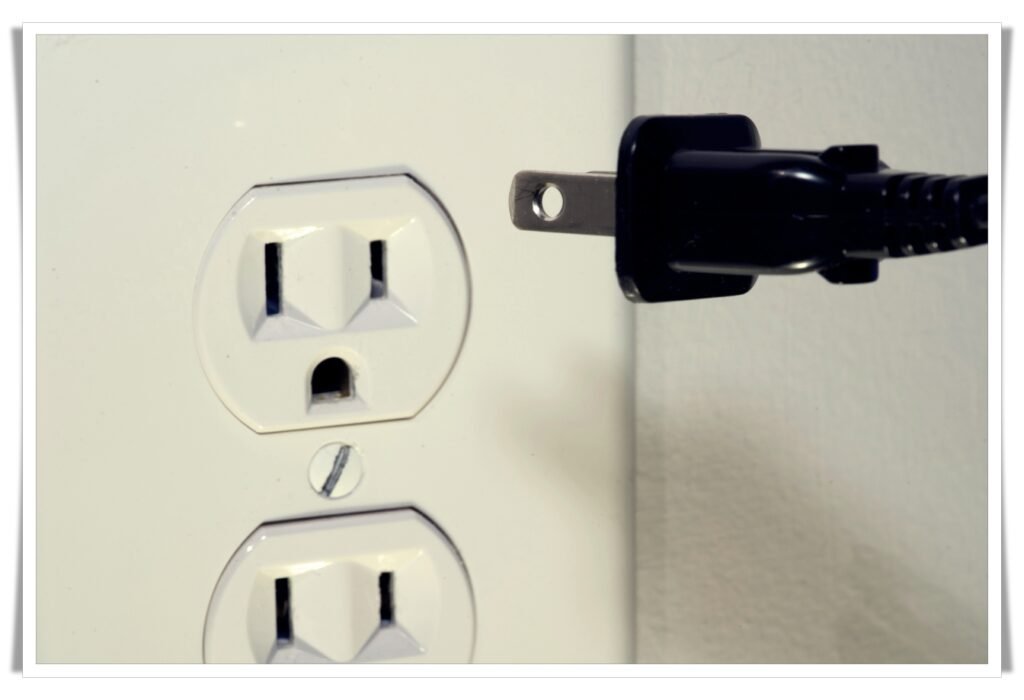
The easiest fix is to plug these devices into smart power strips or smart plugs that you can switch off completely when not in use. Smart power strips run $20 to $40 and are especially useful for entertainment centers and home offices where multiple devices are grouped together. You can control them via app or voice command, making it effortless to cut power when you go to bed or leave the house.
For devices you don’t need on standby at all — like phone chargers, small kitchen appliances, and lamps — simply unplug them when not in use. It takes two seconds and adds up to real money over the course of a month.
5. Run Appliances More Efficiently
Your major appliances — washer, dryer, dishwasher, and refrigerator — are responsible for a significant chunk of your electricity bill. The good news is that most people are using them inefficiently without realizing it, which means there’s easy money to be saved with simple habit changes.
Washing machine tips:
- Wash clothes in cold water. Heating water accounts for about 90% of the energy a washing machine uses. Switching from hot to cold can save $60 to $100 per year.
- Run full loads only. Running a half-empty washer uses almost as much electricity as a full load.
- Use a high-spin cycle to remove more water before drying, which cuts down dryer time.
- Dryer tips:
- Clean the lint filter before every load. A clogged filter makes your dryer work harder and run longer.
- Dry similar fabrics together. Lightweight items dry faster than heavy ones — mixing them causes the dryer to run longer than necessary.
- Air dry clothes whenever possible. A drying rack or outdoor clothesline costs nothing to operate and is gentler on your clothes.
- Use dryer balls instead of dryer sheets. Wool dryer balls reduce drying time by up to 25% by creating space between fabrics.
Refrigerator and dishwasher tips:
- Keep your refrigerator set to 37–40°F and your freezer at 0°F. Every degree colder than needed increases energy consumption by 2–3%.
- Make sure refrigerator door seals are tight. Close the door on a piece of paper — if you can pull it out easily, the seal needs replacing.
- Run your dishwasher only when it’s full and use the air-dry or energy-saver setting instead of heat drying.
- Run the dishwasher and laundry during off-peak hours (usually late evening or early morning). Many utilities charge lower rates during these times.
6.Check Your Utility Plan and Look for Better Rates
Many people have never looked at the actual rate structure on their electricity bill — they just pay whatever number shows up. But your utility company may offer time-of-use (TOU) pricing plans, budget billing, or low-income assistance programs that could significantly reduce your monthly costs.
Time-of-use plans charge different rates depending on when you use electricity. Peak hours (typically 3–8 PM on weekdays) cost more, while off-peak hours (nights and weekends) cost less. If you can shift energy-intensive activities — like running the dishwasher, doing laundry, or charging electric vehicles — to off-peak times, you can save 20% to 30% on those specific costs.
You should also check if your state has retail electricity deregulation. In deregulated states (including Texas, New York, Illinois, Pennsylvania, and others), you can shop for electricity from competing providers and potentially lock in a lower rate. Websites like Power to Choose (in Texas) or EnergySage make it easy to compare rates side by side.
Additional programs to check:
- LIHEAP (Low Income Home Energy Assistance Program): Federal program that helps low-income households with energy bills.
- Utility company weatherization assistance: Many utilities offer free or discounted home energy audits and weatherization improvements.
- Rebates for energy-efficient appliances and smart thermostats from your utility or state government.
- Budget billing plans that average your annual usage into equal monthly payments, smoothing out seasonal spikes.
Frequently Asked Questions
Q: How much can I realistically save on my electric bill each month?
Most households can reduce their electricity costs by 15% to 30% by implementing the strategies in this guide consistently. For someone paying the U.S. average of $137 per month, that translates to savings of $20 to $41 every month — or $250 to $500 over the course of a year. The biggest savings typically come from HVAC improvements (thermostat optimization, air sealing), eliminating phantom loads, and switching fully to LED lighting. If you tackle all three of these areas, you could see results on your very next bill.
Q: Do I need to spend a lot of money upfront to lower my electric bill?
No. Many of the most effective strategies cost nothing at all — adjusting your thermostat settings, changing laundry habits, unplugging unused devices, and turning off lights are all free. The highest-impact low-cost purchases include LED bulbs ($2–$4 each), smart power strips ($20–$40), and a programmable thermostat ($25–$50). These items typically pay for themselves within 1–3 months through energy savings. A smart thermostat like a Nest or Ecobee is the biggest upfront cost at $130–$250, but it pays off within 1–2 years and saves money continuously after that.
Q: What’s the single fastest way to see a lower electric bill next month?
The fastest, easiest change with the most immediate impact is adjusting your thermostat. Set it to 78°F in summer and 68°F in winter when you’re home, and allow it to drift by 7–10 degrees when you’re asleep or away. You can automate this with a $25 programmable thermostat or your existing smart thermostat app. Since HVAC accounts for roughly half of your electricity bill, even a modest thermostat adjustment can shave $15 to $30 off your next month’s bill without any other changes.
Start Lowering Your Electric Bill This Week
Your monthly electric bill is more controllable than most people think. The key is to start with the changes that cost nothing — thermostat adjustments, smarter laundry habits, unplugging phantom loads, and turning off lights — and then layer in low-cost upgrades like LED bulbs and smart power strips as you go.
You don’t need to do everything at once. Pick two or three strategies from this list and implement them this week. Once you see the savings show up on your next bill, you’ll be motivated to keep going.
Consistent, small changes compound over time — and the $300 to $600 you save annually can go straight toward your emergency fund, paying down debt, or building toward a goal that actually excites you.
Check your last electric bill today, identify your highest-usage areas, and start with one change. That’s all it takes to get the ball rolling.