
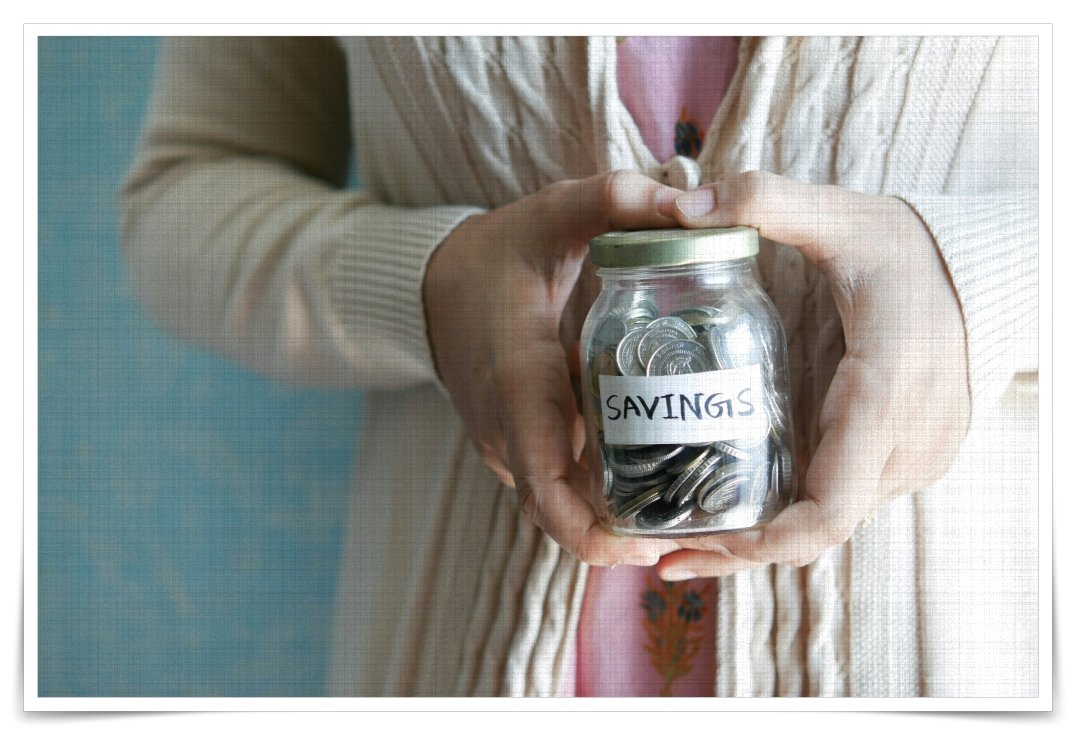

We have all experienced that very specific flavor of panic. It is payday Friday, and you feel a brief, fleeting moment of absolute relief. You immediately pay your rent, cover your car insurance, and buy a week’s worth of groceries.
Then, you casually check your banking app on Sunday morning. Your stomach drops when you realize you have exactly $23 to your name to survive the next two weeks.
If you are a Millennial or Gen Z trying to navigate today’s chaotic economy, this scenario is painfully relatable. Between skyrocketing rent prices, lingering student loans, and the absurd cost of basic groceries, making ends meet feels like an impossible puzzle.
You are probably exhausted from hearing outdated advice from older generations telling you to “just stop buying iced coffee.” You already know that a $5 latte is not the reason you cannot afford a down payment on a house.
You need real, actionable strategies that actually make sense in today’s world. If you are feeling completely stretched to the financial limit, you are in the right place. Today, we are breaking down the Best Ways to Save Money on a Tight Budget so you can finally breathe a little easier.
The Reality of the Cost of Living Crisis
Before we dive into the tips, let’s just validate what you are feeling right now. It is not your fault that saving money feels so incredibly difficult. The cost of living has outpaced wages for years, leaving young adults with less disposable income than previous generations.
You are managing an economy where a basic trip to the grocery store costs a small fortune, and housing takes up a massive percentage of your monthly take-home pay. It is stressful, and it is okay to acknowledge that reality.
However, while you cannot control inflation or the housing market, you can absolutely control how you manage the money that comes into your bank account. You do not need a massive salary to start building a financial safety net.
Saving money on a low income is not about completely depriving yourself of joy. It is about being highly intentional and outsmarting the systems designed to make you overspend. Let’s look at how you can do exactly that.
Best Ways to Save Money on a Tight Budget

When there is not much wiggle room in your bank account, you have to get creative. Here are some of the most effective, stress-free strategies to keep more cash in your pocket.
1. Slay Your Ghost Subscriptions
You probably signed up for a free trial of a streaming service six months ago to watch one specific movie and forgot to cancel it. These “ghost subscriptions” quietly drain your account $10 at a time. Do a ruthless audit of your bank statements today and cancel anything you haven’t used in the last 30 days.
2. Enforce the 24-Hour Cart Rule
Online shopping is dangerously easy. When you see something you want on TikTok or Instagram, put it in your digital cart, but absolutely refuse to hit “buy” for a full 24 hours. Most of the time, the impulse will completely pass, and you will save yourself a $50 impulse buy.
3. Hack Your Grocery Routine
Grocery stores are engineered to make you spend more money. Never go shopping without a strict, written list, and try ordering your groceries for pickup instead of walking the aisles. When you order online, you can see your total adding up in real-time and easily remove items if you go over your weekly limit.
4. Negotiate Your Recurring Bills
Many people do not realize that bills like car insurance, internet, and cell phone plans are actually negotiable. Call your providers once a year, tell them you are looking at cheaper competitors, and ask if they have any current loyalty promotions. A 15-minute phone call could easily save you $30 a month.Consider switching to a budget carrier like Mint Mobile to cut your phone bill by up to 50%.
Real-Life Examples: Let’s Run the Numbers
Sometimes it is hard to see how small changes add up. Let’s look at two totally realistic scenarios to show you how everyday people can find extra cash, even when their budgets are stretched paper-thin.
Example 1: Chloe, a 23-year-old barista
Chloe brings home $2,600 a month. After paying $1,200 for her share of rent, plus utilities, gas, and her minimum debt payments, she feels like she has nothing left to save.
- Starting Savings: $0
- Action 1: She cancels three unused subscription apps, saving $35 a month.
- Action 2: She switches her cell phone plan to a budget carrier, saving $45 a month.
- Action 3: She uses the 24-hour rule to stop buying impulse clothes, saving about $70 a month.
- Result: Without picking up a second job, Chloe suddenly has $150 a month to put straight into her savings account. In one year, she will save $1,800.
Example 2: Marcus, a 27-year-old teacher
Marcus brings home $3,400 a month. He wants to build an emergency fund but is overwhelmed by his $400 monthly student loan payment and high grocery costs.
- Starting Savings: $50
- Action 1: He starts ordering groceries for pickup, cutting out $100 of junk food impulse buys each month.
- Action 2: He calls his car insurance provider and negotiates his rate down by $30 a month.
- Action 3: He sells an old pair of designer sneakers online for $120 to jumpstart his fund.
- Result: Marcus instantly deposits the $120 from his sneakers. Then, he automatically transfers his $130 in monthly savings to his emergency fund. He is well on his way to a solid financial buffer.
Top 5 Free Budgeting Apps to Keep You on Track
You do not have to rely on mental math or complicated spreadsheets to figure all of this out. There are fantastic, entirely free apps designed to do the heavy lifting for you.
Here are the top 5 free budgeting apps for 2026, comparing their best features for Millennials and Gen Z:
| Budgeting App | Best Feature | Why It Works for You |
| Rocket Money | Subscription Cancellation | It scans your accounts, finds forgotten subscriptions, and will literally cancel them for you to instantly free up cash. |
| EveryDollar | Zero-Based Method | Created for intentional planning. You assign every single dollar a job before the month starts, preventing mindless spending. |
| Cleo | AI Financial Assistant | Uses AI to track your spending and gives you a brutal (but hilarious) “roast” if you overspend on takeout. |
| Goodbudget | Digital Envelopes | Perfect for strict limits. You fund digital envelopes for categories like groceries and stop spending when they are empty. |
| PocketGuard | “In My Pocket” Tracker | Calculates your bills and tells you exactly how much safe, disposable cash you have left for the day or week. |
Rocket Money is the absolute winner if you know you are leaking money through random apps and services. It acts as a financial bouncer, actively protecting your checking account from sneaky recurring charges.
EveryDollar is fantastic if you want total control. The free version requires manual entry, which forces you to look at your spending daily and stay hyper-aware of where your cash is going.
Cleo is designed specifically for Gen Z. If looking at a traditional spreadsheet gives you anxiety, Cleo makes budgeting feel like texting a very financially responsible, slightly sarcastic best friend.
Goodbudget takes the proven cash-envelope method and digitizes it. If you struggle with overspending at the grocery store, this app gives you a hard visual boundary.
PocketGuard simplifies everything down to one number. Instead of worrying about a dozen different categories, it just tells you if you can afford to go to dinner tonight based on what is “in your pocket.”
Frequently Asked Questions (FAQ)
1. How do I save money when my rent takes up half of my paycheck?
When your fixed costs are that high, you have to focus intensely on your variable expenses. You cannot easily change your rent tomorrow, but you can change your food costs, utility usage, and entertainment spending today. Focus on lowering your grocery bill through meal planning and utilize free community events for entertainment.
2. Do I really have to give up going out with my friends?
Absolutely not. Total deprivation usually leads to budgeting burnout. Instead, be the friend who suggests budget-friendly alternatives. Host a potluck dinner instead of going to a $40-per-plate restaurant. Suggest a hike, a free museum day, or a movie night at home. You can maintain your social life without wrecking your bank account.
3. What is the 50/30/20 rule, and does it work on a tight budget?
The 50/30/20 rule suggests spending 50% of your income on needs, 30% on wants, and 20% on savings. However, on a very tight budget, this is often entirely unrealistic. If your needs take up 70% of your income, do not stress about the rule. Just focus on saving whatever percentage you can, even if it is only 5% to start.
Conclusion: Start Small and Stay Consistent
Figuring out the Best Ways to Save Money on a Tight Budget does not require a massive overhaul of your entire personality. It is simply about making small, calculated adjustments that add up over time.
You do not need to save $500 a month right out of the gate. If you can only save $20 this month, that is still a massive victory. The goal is to build the habit of paying yourself first, no matter how small the amount.
Take a deep breath. You have the tools, the apps, and the strategies to start taking your power back from a tough economy.



[…] Ready to start saving? Pick one strategy from this list—like researching “comps” in your area or looking for buildings with “one month free” specials—and start your search today. Check our guide on the best ways to save money on a tight budget […]
[…] Groceries: Meal planning for the week saves single parents an average of $100–$200/month. Stick to a list, buy store brands, and batch-cook meals on Sunday. Apps like Ibotta or Fetch Rewards can give you cash back on everyday grocery purchases. […]
[…] Healthcare costs can feel overwhelming, but you have more control than you think. Start with what’s easy: book your free annual physical, switch to generics, open an HSA or FSA if you’re eligible, and compare pharmacy prices with GoodRx. Each of these steps alone can save $100–$500 per year. Together, they can save you thousands. […]