


Most people think you need thousands of dollars to start investing. That myth keeps millions of Americans on the sidelines for years, watching their cash sit in a checking account earning almost nothing while inflation chips away at it. The truth is that you can start investing with $50 today and build a real portfolio in less than 15 minutes.
This guide walks you through exactly how to invest your first $50 as a beginner, from choosing the right app to picking your first investment. No jargon, no pressure to buy anything fancy, and no minimum balance traps. By the end, you will know where to put that $50, how to keep adding to it, and what mistakes to avoid in your first year as an investor.
Why $50 Is More Than Enough to Start
Twenty years ago, you needed at least $1,000 to open a brokerage account, and many mutual funds required a $3,000 minimum. That world is gone. Modern investing apps now offer fractional shares, which means you can buy a $0.50 slice of a $300 stock. With $50, you can own pieces of Apple, Amazon, and Microsoft on the same afternoon.
The real value of starting with $50 is not the dollar amount, it is the habit. People who invest $50 a month from age 25 to 65 at an average 8% return end up with around $174,000. Not bad for what amounts to skipping two restaurant meals a month. The earlier you build that habit, the more compounding does the heavy lifting for you. Compounding is also why our guide on how to save money for retirement in your 20s is so important.
Starting small also lowers the emotional stakes. If your first investment drops 15%, you lose $7.50, not $7,500. That gives you room to learn how the market actually feels before you scale up.
Step 1: Pick a Beginner-Friendly Brokerage App
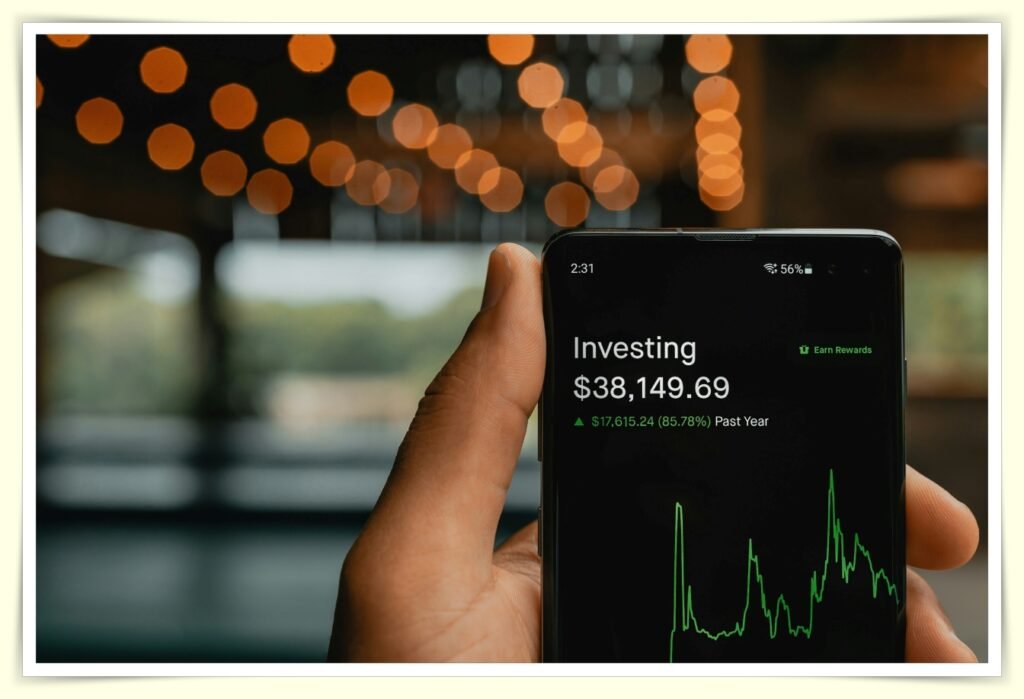
Before you can invest your $50, you need a brokerage account. Three apps stand out for absolute beginners in 2026:
- Fidelity: $0 minimum, fractional shares starting at $1, and access to commission-free index funds with no expense ratio on Fidelity ZERO funds.
- Charles Schwab: $0 minimum, Schwab Stock Slices let you buy fractional shares of S&P 500 companies starting at $5.
- SoFi Invest: $1 minimum, clean mobile interface, and automatic recurring investments built right into the app.
Avoid app-only platforms that gamify trading with confetti animations and push notifications. Those tools are designed to make you trade more, and beginners who trade more usually earn less. Stick with traditional brokerages that have a long track record and clear fee disclosures.
Account opening usually takes 10 minutes. You will need your Social Security number, a government ID, your bank account routing number, and your employer information. The brokerage transfers your $50 from your bank in 1 to 3 business days.
Step 2: Choose the Right Investment for Your First $50
Now comes the question every new investor asks: what should I actually buy? You have three solid options for a $50 starting balance.
Option 1: A Total Stock Market Index Fund
This is the answer most financial experts give for a reason. Funds like VTI (Vanguard Total Stock Market ETF) or FZROX (Fidelity ZERO Total Market) hold thousands of U.S. stocks in one fund. You get instant diversification with one purchase. VTI trades around $280 per share, but with fractional shares, your $50 buys you about 0.18 shares.
Option 2: An S&P 500 Index Fund
If you want something even simpler, an S&P 500 fund like VOO or SPY tracks the 500 largest U.S. companies. Historical average returns sit around 10% per year before inflation. This is the same investment Warren Buffett recommends for beginners.
Option 3: A Target-Date Retirement Fund
If you want a one-and-done choice, target-date funds like Vanguard Target Retirement 2065 (VLXVX) automatically adjust your stock-bond mix as you age. You buy one fund and never have to rebalance.
For your first $50, picking any of these three is a winning move. The worst thing you can do is freeze up trying to find the perfect option. Done is better than perfect when it comes to investing.
Step 3: Set Up Automatic Recurring Investments
A single $50 deposit will not change your life. A recurring $50 deposit every two weeks for 30 years absolutely will. After you place your first trade, the most important step is automating future contributions so you never have to think about investing again.
In your brokerage app, look for a setting labeled “Recurring Investments” or “Auto-Invest.” Set the schedule to match your paycheck, usually every other Friday for most U.S. workers. Choose the same fund you bought for your first $50 and let the app handle the rest.
Even $25 every two weeks adds up to $650 a year. At a 7% annual return, that becomes $30,000 in 25 years. That is the magic of dollar-cost averaging combined with compounding interest. You buy more shares when prices are low and fewer when prices are high, all without lifting a finger.
Step 4: Avoid the 5 Biggest Beginner Mistakes
Most new investors lose money not because the market crashed but because they made avoidable mistakes. Here are five to dodge from day one.
- Chasing meme stocks or hot tips. If your coworker is bragging about a stock at lunch, the easy money is already gone. Stick to broad index funds for at least your first year.
- Selling during a dip. The S&P 500 has dropped more than 10% in over 30 different years since 1928, and it has recovered every single time. Selling locks in losses.
- Trading too often. Each sale can trigger short-term capital gains tax of up to 37% if you held the asset for less than a year. Buy and hold beats day trading for 95% of retail investors.
- Ignoring your 401(k) match first. If your employer matches retirement contributions, contribute enough to get the full match before you invest in a taxable brokerage account. That match is free money worth up to a 100% return.
- Skipping an emergency fund. You should have at least $1,000 in a high-yield savings account before you tie up money in stocks. Otherwise a flat tire becomes a forced sale at a loss.
Step 5: Track Your Progress Without Obsessing
Checking your investment app three times a day is the fastest way to talk yourself into a bad decision. The S&P 500 finishes positive in roughly 73% of years, but day-to-day swings can rattle anyone. A practical rule for beginners is to review your portfolio once a month for 10 minutes, no more.
When you do check in, focus on three things: total amount invested this month, current account balance, and your contribution rate. Avoid clicking on individual fund prices and trying to predict where they go next. That is a job for full-time analysts, not part-time savers.
Free tools like Personal Capital, Empower, or your brokerage’s built-in dashboard can show you your asset allocation and monthly progress on one screen. Set a calendar reminder for the first Saturday of each month and treat it like a 10-minute money date with yourself.
How Much Could $50 a Month Actually Grow Into?
Numbers help cement why this matters. Assuming an 8% average annual return, here is how a $50 monthly investment compounds:
- After 5 years: about $3,700
- After 10 years: about $9,200
- After 20 years: about $29,500
- After 30 years: about $74,500
- After 40 years: about $174,500
These numbers assume you never increase your contribution. The day you bump your monthly investment from $50 to $100, every figure roughly doubles. The day you push it to $500 a month, the 30-year balance climbs past $745,000. Time and consistency matter far more than the dollar amount you start with.
Frequently Asked Questions
Can I really start investing with just $50?
Yes, and it is easier than ever. Brokerages like Fidelity, Schwab, and SoFi have removed account minimums and added fractional shares so you can buy slices of stocks and ETFs for as little as $1. Your $50 can be spread across multiple companies or invested in a single index fund within minutes of opening an account.
Is it better to invest $50 in stocks or save it in a high-yield savings account?
It depends on your timeline and emergency fund status. Money you might need in the next 1 to 3 years should sit in a high-yield savings account earning around 4% to 5% APY in 2026. Money you will not touch for at least 5 years generally earns more in a diversified index fund. If you do not yet have a $1,000 emergency cushion, build that first, then invest.
What happens to my $50 if the stock market crashes?
Short-term, your account balance drops along with the market. Historically, however, every U.S. stock market crash since 1928 has been followed by a full recovery, usually within 1 to 4 years. The investors who panicked and sold locked in losses. Those who kept investing during downturns ended up buying more shares at discounted prices, which boosted long-term returns. Holding through volatility is part of the deal when you invest in stocks.
Final Thoughts
Investing your first $50 is less about the money and more about flipping a mental switch from saver to investor. Open a brokerage account today, transfer the $50, buy a low-cost total market or S&P 500 index fund, and turn on automatic recurring investments. Those four steps take less than 30 minutes and put you ahead of nearly half of American adults who own no stocks at all. Need extra cash to invest? Read our guide on how to make $500 a month from home.
Pick one app from the list above, schedule 20 quiet minutes this evening, and just start. Future you, the one with a fully funded retirement and zero regret about waiting, will thank present you for taking action with that first $50.