
How to Save Money on Gas Every Week. Gas prices can feel completely out of your control. One week you’re paying $3.10/gallon, and the next it jumps to $3.80 with zero warning. But while you can’t control what’s happening at the pump, you can absolutely control how much gas you buy, how cheaply you buy it, and how efficiently you use it. Americans spend an average of $2,000–$3,000 per year on gasoline — and most of that money can be significantly reduced with the right habits.
Whether you drive a lot for work, have a long commute, or just want to stop feeling robbed at every fill-up, these practical strategies will help you cut your weekly gas bill starting this week.
Use Gas Price Apps to Always Find the Cheapest Station
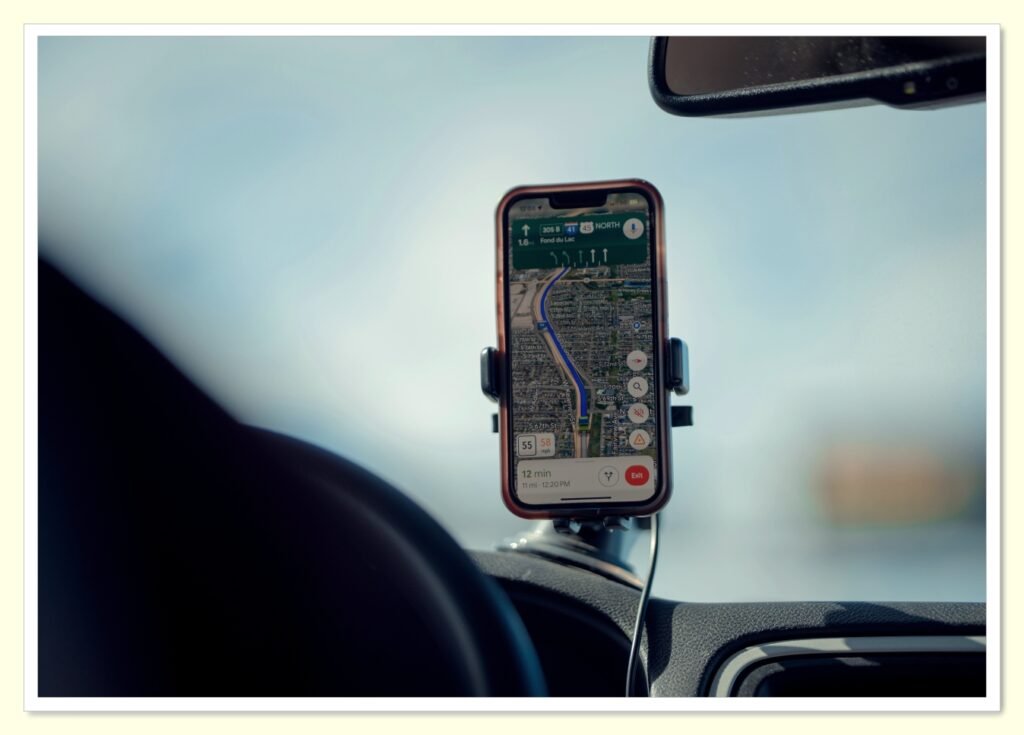
The single fastest way to save money on gas is to stop paying more than you have to. Gas prices vary wildly — even within a few miles — based on location, competition, and brand. Stations near highways, airports, or tourist areas consistently charge $0.20–$0.50 more per gallon than nearby neighborhood stations.
The best free apps for finding cheap gas:
- GasBuddy: The most popular option, showing real-time prices crowdsourced from drivers nearby. Can save you $5–$15 per fill-up.
- Waze: Integrates gas prices directly into navigation — helpful if you’re already using it for directions.
- Google Maps: Shows nearby gas stations with prices when you search ‘gas near me.’
- AAA Mobile App: Shows current average prices by grade and region.
On a 15-gallon tank, saving even $0.20/gallon saves $3 per fill-up — roughly $150/year if you fill up once a week. Finding $0.50/gallon cheaper saves $390/year from this one habit alone.
Join Gas Station Rewards Programs and Use the Right Credit Card
Most major gas chains offer free loyalty programs that give you cents-per-gallon discounts just for signing up and filling up regularly.
Worthwhile programs:
- Shell Fuel Rewards: Members regularly save $0.05–$0.10/gallon, and dining/shopping partners add more.
- Exxon Mobil Rewards+: Earn points on purchases redeemable for fuel discounts.
- BPme Rewards: Save $0.05/gallon plus earn points on every fill-up.
- Speedway Speedy Rewards: Points redeemable for free fuel.
Layering a cash-back credit card on top of these programs amplifies savings. The best gas credit cards offer 3–5% cash back at gas stations:
- Costco Anywhere Visa by Citi: 4% back on gas (up to $7,000/year) — one of the best available
- PenFed Platinum Rewards: 5x points at gas stations
- Sam’s Club Mastercard: 5% back on gas purchases
If you spend $200/month on gas, a 4% cash-back card returns $96/year passively.
Shop at Warehouse Clubs and Grocery Store Gas Stations
Costco, Sam’s Club, and BJ’s Wholesale Club consistently offer gas $0.10–$0.30 per gallon cheaper than nearby competitors. The catch: you need a membership. But at $65/year for Costco and significant savings on both gas and groceries, the membership often pays for itself in gas savings within a few months for regular drivers.
Grocery store gas programs are another hidden gem. Kroger, Safeway, Fred Meyer, and similar chains offer fuel points that accumulate with grocery purchases — then you redeem them at their affiliated gas stations.
- Kroger: Earn 1 fuel point per $1 spent on groceries, 100 points = $0.10/gallon off
- Some promotions offer 4x fuel points on gift card purchases — buying gift cards for stores you already use can earn significant fuel discounts
- Maximum discount per fill-up is often $1.00/gallon, saving $15 on a 15-gallon fill-up
If you grocery shop regularly at one of these chains, activating and using these fuel points is essentially free money you’re currently leaving on the table.
Drive More Efficiently to Stretch Every Gallon
How you drive dramatically affects your fuel economy. Aggressive driving — hard acceleration, hard braking, excessive idling — can reduce gas mileage by 15–40% compared to smooth, efficient driving. That’s a massive difference in real-world fuel costs.
Driving habits that save gas:
- Accelerate gradually: Jackrabbit starts burn significantly more fuel. Ease onto the gas pedal instead.
- Anticipate stops: Coasting to a red light rather than braking hard saves fuel and reduces brake wear.
- Use cruise control on highways: Maintains steady speed far better than human reactions, improving highway MPG by 7–14%.
- Observe speed limits: Fuel efficiency drops sharply above 50 mph. Driving 75 mph instead of 65 mph uses roughly 15% more fuel.
- Avoid excessive idling: Idling gets exactly 0 MPG. Turn off your engine if waiting more than 60 seconds.
- Also keep tires properly inflated. Underinflated tires increase rolling resistance and reduce fuel economy by 0.5–3% per PSI below recommended. Check tire pressure monthly — it takes 2 minutes.
Reduce How Much You Drive Through Smart Trip Planning
The cheapest gas is the gas you never buy. Reducing unnecessary driving through trip consolidation and alternative transportation can cut your gas spending by 20–40%.
Practical ways to drive less:
- Batch errands: Instead of multiple short trips throughout the week, combine them into 1–2 efficient loops. Short trips are disproportionately fuel-inefficient because the engine never fully warms up.
- Work from home when possible: Even 1–2 days/week can eliminate 20–40% of commute miles.
- Carpool: Splitting commuting costs with one coworker cuts your gas bill in half on those trips.
- Use public transit for part of your commute: Park at a transit hub and ride in, paying only for parking.
- Bike or walk for short trips under 2 miles: These short car trips are the most fuel-inefficient anyway.
For the average American driving 15,000 miles/year at 25 MPG paying $3.50/gallon, reducing annual miles by just 2,000 saves $280/year in gas.
Maintain Your Vehicle to Maximize Fuel Efficiency
A poorly maintained vehicle consumes more fuel. Simple, inexpensive maintenance tasks keep your car running at peak efficiency and prevent small issues from becoming costly ones.
Key maintenance items for fuel efficiency:
- Air filter replacement ($15–$25 DIY): A clogged air filter reduces fuel efficiency by up to 10%. Replace every 12,000–15,000 miles.
- Spark plugs ($40–$100 DIY): Worn plugs misfire and waste fuel. Replace per manufacturer schedule (usually every 30,000–100,000 miles).
- Oxygen sensor: A failing O2 sensor can decrease fuel economy by up to 40%. If your check engine light is on, don’t ignore it.
- Tire alignment: Misaligned tires create drag, increasing fuel consumption. Get aligned annually or after hitting a major pothole.
- Use the recommended motor oil grade: Using the wrong viscosity increases engine friction and hurts MPG.
Frequently Asked Questions
Is it worth driving out of my way to find cheaper gas?
Run the math before detouring. If gas is $0.20/gallon cheaper at a station 3 miles out of your way, you’ll use about 0.2 gallons of extra gas to get there and back — costing $0.60. On a 12-gallon fill-up, you save $2.40 but spend $0.60 getting there, netting $1.80. That’s worth it. But driving 10+ miles out of your way for a slight discount rarely makes sense financially.
Does the grade of gasoline I use really matter?
For most vehicles, no. Unless your car specifically requires premium fuel (check your owner’s manual), using premium doesn’t improve performance or fuel economy over regular. Using regular in a car that recommends (but doesn’t require) premium is generally fine too. Only use premium if your manufacturer requires it — otherwise you’re spending $0.40–$0.60/gallon extra for no benefit.
How much can I realistically save on gas each week?
A combination of using a gas-price app, joining a rewards program, and driving more efficiently can realistically save $20–$40/month for the average driver. For high-mileage drivers (20,000+ miles/year), combining warehouse club discounts, a cash-back credit card, and efficient driving could save $500–$800+ annually.
Conclusion: Small Gas Habits Add Up to Big Yearly Savings
You won’t save $500/year at the pump by doing one thing. You save it by stacking small wins: checking GasBuddy before you fill up, earning points at your grocery store’s pump, accelerating smoothly, keeping your tires inflated, and batching your errands. None of these habits take more than a few minutes. For more ways to reduce your bills, read our guide on how to cut monthly expenses.
Start this week with the simplest step: download GasBuddy and use it for your next fill-up. Then add one more habit the following week. Small, consistent changes compound into real savings over a year — savings that actually stay in your pocket instead of going to the gas company. Put your gas savings to work with one of our money saving challenges.