
If you have ever reached the end of the month wondering where all your money went, you are not alone. According to a 2025 Bankrate survey, nearly 60% of Americans cannot cover a $1,000 emergency expense with savings. The problem is rarely about not earning enough. It is about not having a clear system for where every dollar goes.
Enter the envelope budgeting method, one of the simplest and most effective ways to take control of your spending. This cash-based system has been around for decades, but it remains one of the best tools for beginners who want to stop overspending and start building real financial habits. Whether you use physical envelopes or a digital app, the envelope method gives you a tangible way to manage your money that no spreadsheet or bank notification can match.
In this guide, you will learn exactly how the envelope budgeting method works, how to set it up step by step, which categories to use, common mistakes to avoid, and how to adapt it for a modern, cashless lifestyle. By the end, you will have everything you need to start your first envelope budget this week.
What Is the Envelope Budgeting Method?
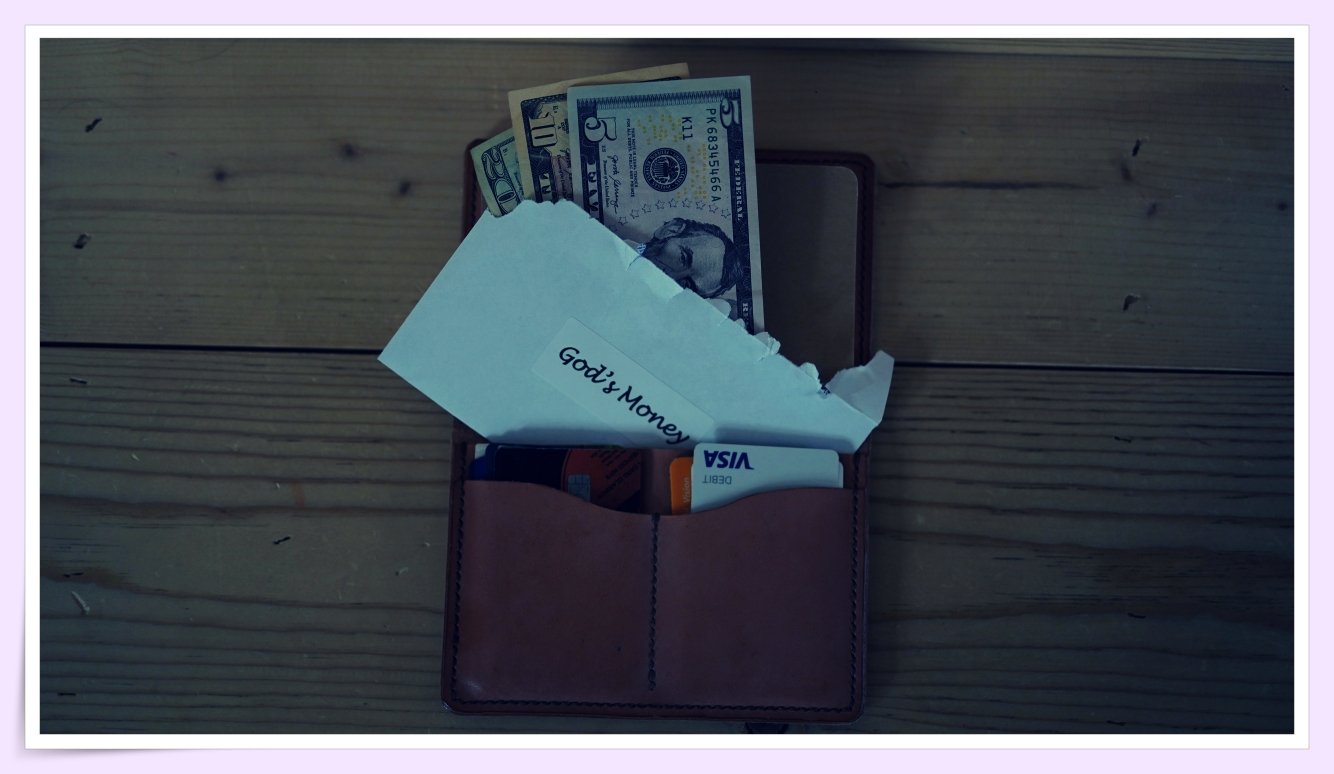
The envelope budgeting method is a cash-based budgeting system where you divide your take-home pay into separate categories and place a set amount of cash into a physical envelope for each one. Once the cash in an envelope is gone, you stop spending in that category until the next pay period.
For example, if you earn $3,200 per month after taxes, you might allocate $500 to groceries, $200 to dining out, $100 to entertainment, $150 to clothing, and $80 to personal care. Each of these amounts goes into its own labeled envelope at the start of the month. When your dining out envelope is empty on the 20th, that means no more restaurant meals until next month.
The beauty of this method is its simplicity. There is no complicated software to learn, no formulas to calculate, and no apps to sync. You can physically see and feel your money shrinking, which creates a powerful psychological connection between spending and reality. Studies from the Journal of Consumer Research show that people spend 12% to 18% less when paying with cash compared to credit or debit cards.
The envelope method works especially well for variable expenses, the categories where overspending is most common. Fixed expenses like rent ($1,200/month), car payments ($350/month), and insurance ($150/month) are typically paid electronically and do not need envelopes. The envelopes focus on the spending you can actually control day to day.
How to Set Up Your Envelope Budget in 5 Steps
Setting up an envelope budget takes about 30 minutes, and you only need a few supplies: envelopes or small pouches, a pen, and your most recent bank statement. Here is how to get started.
Step 1: Calculate Your Take-Home Pay
Start with the amount that actually hits your bank account after taxes, retirement contributions, and health insurance. If you earn $45,000 per year and bring home about $3,200 per month, that $3,200 is your starting number. If your income varies, use the average of your last three months or use the lowest month as your baseline to stay safe.
Step 2: List Your Fixed Expenses
Write down every bill that stays the same each month. These include rent or mortgage ($1,200), car payment ($350), insurance ($150), phone bill ($85), streaming subscriptions ($45), and minimum debt payments ($200). Add them up. If your fixed expenses total $2,030, subtract that from your take-home pay. You now have $1,170 left for variable spending and savings.
Step 3: Choose Your Envelope Categories
Look at your bank and credit card statements from the past two to three months. Identify where your variable spending goes. Common envelope categories include:
- Groceries: $400/month
- Dining out: $150/month
- Gas and transportation: $120/month
- Entertainment: $80/month
- Clothing: $60/month
- Personal care: $50/month
- Miscellaneous: $60/month
That totals $920, leaving $250 for savings or debt payoff. Adjust the amounts based on your own spending patterns. The key is to be realistic. If you typically spend $500 on groceries, do not set your envelope at $300 and expect to succeed.
Step 4: Fill Your Envelopes
On payday, withdraw the total cash you need for your envelopes. If you get paid biweekly, divide each monthly amount in half. Walk through your envelopes and place the exact amount in each one. Label each envelope clearly with the category name and the dollar amount.
Step 5: Spend Only From Envelopes
When you go grocery shopping, bring your grocery envelope. When you go out to eat, bring your dining envelope. The rule is simple: if the envelope is empty, you are done spending in that category. No borrowing from other envelopes unless you establish that rule in advance. This hard boundary is what makes the system work.
Best Envelope Categories for Beginners
Choosing the right categories can make or break your envelope budget. If you start with too many envelopes, the system becomes overwhelming. If you have too few, you miss the spending areas where you lose the most money.
For beginners, start with five to seven envelopes. Here are the categories that have the biggest impact on most budgets:
Groceries
The average American household spends $475 per month on groceries according to the USDA. This is one of the easiest categories to overspend on because every trip to the store offers temptation. An envelope keeps you honest. When you see $47 left in your grocery envelope with a week to go, you get creative with what is already in your pantry.
Dining Out and Coffee
Americans spend an average of $250 to $350 per month on restaurants and takeout. If you are trying to cut back, a $100 to $150 dining envelope forces you to be intentional about when and where you eat out. That $15 lunch starts to feel different when you can see the cash leaving your hand.
Entertainment and Fun Money
This covers movies, concerts, hobbies, games, and anything you do for fun. Setting aside $60 to $100 per month gives you permission to enjoy life while staying within limits. Without this category, you might feel deprived and abandon the budget entirely.
Gas and Transportation
If you drive regularly, gas can eat into your budget quickly, especially with prices fluctuating between $3.00 and $4.50 per gallon. An envelope of $100 to $150 per month helps you monitor this spending and consider carpooling or combining errands when your envelope gets low.
Clothing and Personal Care
These categories are easy to ignore until you realize you have spent $200 on impulse purchases at Target. A combined envelope of $80 to $120 per month covers basics like haircuts, toiletries, and the occasional new outfit without derailing your budget.
As you get comfortable with the system, you can add more specific envelopes like gifts ($50/month), pet expenses ($40/month), or household supplies ($30/month). But start simple. Mastering five envelopes first builds the habit before adding complexity.
Digital Envelope Budgeting: How to Go Cashless
Not everyone wants to carry cash, and that is completely fine. The envelope method has evolved with technology, and several apps now replicate the envelope system digitally. The core principle stays the same: allocate specific amounts to specific categories and stop when the allocation is gone.
Top Digital Envelope Budgeting Apps
Goodbudget is one of the best free options for digital envelope budgeting. It lets you create virtual envelopes, track spending in real time, and sync across devices. The free version supports up to 10 envelopes, which is plenty for most beginners. The premium version costs $8/month and offers unlimited envelopes.
YNAB (You Need A Budget) uses a philosophy similar to envelope budgeting, where every dollar gets a job. At $14.99/month or $99/year, it is an investment, but users report saving an average of $600 in the first two months and $6,000 in the first year. YNAB connects directly to your bank accounts and categorizes transactions automatically.
EveryDollar, created by financial educator Dave Ramsey, offers a free version that works like a digital envelope system. You create budget categories, assign amounts, and track your spending throughout the month. The premium version at $17.99/month adds bank connectivity for automatic transaction imports.
PocketGuard takes a slightly different approach by showing you how much you have left to spend after bills, goals, and necessities. It automatically categorizes your spending and shows a clear “in my pocket” number that functions like a single master envelope.
The advantage of digital envelopes is convenience. You do not need to visit an ATM, you can track spending instantly, and you can adjust categories on the fly. The disadvantage is that you lose the tactile impact of watching physical cash disappear. Many budgeting experts recommend starting with physical envelopes for the first two to three months to build the habit, then transitioning to digital once the discipline is established.
Common Envelope Budgeting Mistakes and How to Avoid Them
The envelope method is simple, but that does not mean it is foolproof. Here are the most common mistakes beginners make and how to fix them.
Setting Unrealistic Amounts
If you currently spend $600 on groceries and set your envelope at $300, you are setting yourself up for failure. Start by reducing your spending by 10% to 15% in the first month. Cut your grocery envelope to $510 or $520 and gradually decrease it over time. Small, sustainable cuts work better than drastic restrictions.
Borrowing Between Envelopes
Dipping into your grocery envelope to fund a night out defeats the purpose. If you find yourself constantly borrowing, it means your allocations need adjusting, not that you need to break the rules. Review your envelopes at the end of each month and reallocate based on real spending patterns.
Forgetting to Track Online Purchases
The envelope method was designed for cash, but we live in an online shopping world. Every time you make an online purchase, pull the equivalent amount from the appropriate envelope and set it aside. Some people keep a separate tracking sheet for online spending to subtract from their envelope totals. Apps like Goodbudget handle this automatically.
Not Including a Buffer Category
Life is unpredictable. A $50 to $100 miscellaneous envelope saves you from raiding other categories when unexpected small expenses pop up. A coworker’s birthday collection, a parking ticket, or a last-minute school supply request can all come from this buffer without disrupting your entire budget.
Giving Up Too Early
The first month with envelopes is the hardest. You will probably run out of money in at least one category before the month ends. That is normal and expected. The envelope method is not about being perfect from day one. It is about building awareness of where your money goes. Most people see significant improvement by month two or three.
Envelope Budgeting vs. Other Budgeting Methods
With so many budgeting systems out there, you might wonder how the envelope method compares. Here is a quick breakdown.
Envelope Method vs. 50/30/20 Rule
The 50/30/20 rule divides your income into three broad categories: 50% for needs, 30% for wants, and 20% for savings and debt. It is a great starting framework, but it lacks the granularity of the envelope method. You might stay within your 30% wants budget overall but still overspend on dining out while underspending on hobbies. Envelopes give you category-level control that the 50/30/20 rule cannot.
Envelope Method vs. Zero-Based Budgeting
Zero-based budgeting assigns every dollar a job until you reach zero. The envelope method is actually a form of zero-based budgeting, but with a physical or visual enforcement mechanism. If you like the idea of zero-based budgeting but struggle with discipline, envelopes add the accountability layer that makes the concept stick.
Envelope Method vs. Pay Yourself First
Pay yourself first focuses on automatically saving a set amount before spending anything else. These two methods actually work beautifully together. You can set up automatic transfers of $250 to $500 per month into a high-yield savings account at Marcus by Goldman Sachs or Ally Bank earning 4.00% to 4.50% APY, then use envelopes to manage everything that remains.
Frequently Asked Questions
How much cash should I keep in my envelopes each month?
The amount depends entirely on your income and spending habits. A good starting point is to allocate 40% to 60% of your take-home pay toward envelope categories. For someone earning $3,200 per month, that is roughly $1,280 to $1,920 split across five to seven envelopes. Start with your actual spending from the past three months and reduce each category by 10% to create a small challenge without making the budget impossible.
Can I use the envelope method if I get paid biweekly instead of monthly?
Absolutely. If you get paid every two weeks, simply divide your monthly envelope amounts in half and refill your envelopes on each payday. For example, if your grocery envelope is $400 per month, put $200 in on each payday. Some people prefer to fund all envelopes on the first paycheck and use the second paycheck for savings and bills. Either approach works as long as you stay consistent.
What should I do with leftover cash in my envelopes at the end of the month?
You have several options. You can roll the leftover into next month’s envelope, giving yourself a little extra cushion. You can move it into a savings envelope to build your emergency fund toward that initial $1,000 goal. Or you can treat it as a reward and add it to your fun money for next month. Many successful envelope budgeters use a 50/50 rule: half of any leftover goes to savings and half rolls into the next month.
Start Your Envelope Budget This Weekend

The envelope budgeting method works because it removes the guesswork from spending. Instead of checking your bank app and hoping the numbers work out, you have a clear, visual system that tells you exactly where you stand in every category at any moment.
You do not need a finance degree or expensive software to manage your money well. All you need is a stack of envelopes, a pen, and the willingness to be honest about your spending. Start with five categories this weekend, fund them on your next payday, and commit to the system for 30 days.
If you want extra help tracking your spending alongside your envelopes, pair this method with a free budgeting app like Goodbudget or EveryDollar. And if you are looking for more ways to stretch your dollars, check out our guides on how to save $1,000 in 3 months and the best free budgeting apps in 2026 for additional strategies that complement the envelope system perfectly.
Your first month will not be perfect, and it does not need to be. What matters is that you start. The envelope method has helped millions of people break the paycheck-to-paycheck cycle, and it can do the same for you.